


What's Happening?
The conscious drinking movement, initially popularized by author Ruby Warrington in 2018, has evolved from a seasonal 'dry' January trend into a year-round cultural shift. This movement emphasizes mindful and intentional consumption of beverages, where
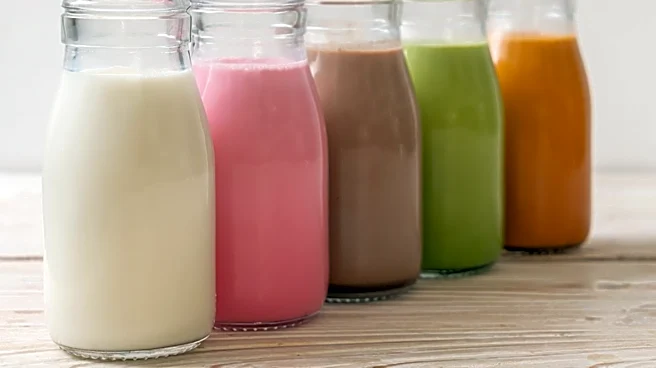
non-alcoholic options are presented with equal prominence alongside alcoholic ones. Data from search interest, bar menus, and retail indicate that choosing not to drink alcohol on any given night has become a normalized decision, rather than a temporary pledge. Modern hospitality now focuses on offering a full drinks menu where both spirited and non-alcoholic choices are equally billed, allowing individuals to select what suits them without needing to provide explanations. This approach signifies a move away from strict rules towards intentional choices based on personal preference, the occasion, and desired feelings, rather than mere habit. The shift is supported by advancements in cocktail culture, with bartenders creating complex, botanical-driven non-alcoholic spirits that mimic traditional alcoholic beverages, and hosts becoming more inclusive by stocking excellent non-alcoholic options year-round.
Why It's Important?
This shift in conscious drinking has significant implications for the U.S. beverage industry, hospitality sector, and broader societal norms around alcohol consumption. For businesses, it necessitates a re-evaluation of product offerings and marketing strategies, with a growing demand for high-quality, sophisticated non-alcoholic alternatives. Bars and restaurants that adapt by integrating diverse and well-crafted non-alcoholic menus are likely to attract a wider customer base, including those who are 'sober curious,' training for events, or simply prefer lighter options. This trend also impacts public health by promoting more mindful consumption habits, potentially leading to reduced alcohol intake and associated health risks across the population. Socially, it fosters a more inclusive environment where individuals feel less pressure to consume alcohol, normalizing personal choice and reducing stigma around abstention. The emphasis on flavor exploration in non-alcoholic options also drives innovation within the beverage industry, pushing manufacturers and mixologists to develop new and exciting products that cater to evolving consumer tastes.
What's Next?
The conscious drinking movement is expected to continue its growth, leading to further innovation in the non-alcoholic beverage market. Consumers can anticipate an even broader range of sophisticated non-alcoholic spirits, wines, and cocktails becoming readily available in retail and hospitality settings. Bartenders and mixologists will likely continue to push creative boundaries, developing new recipes and techniques to enhance the non-alcoholic drinking experience. This will also prompt more establishments to adopt inclusive drink menus as a standard practice, moving beyond simply offering basic sodas to providing thoughtfully crafted alternatives. The language surrounding beverage choices will likely evolve further, with hosts and servers routinely presenting all options without assumption or requiring justification for non-alcoholic selections. This sustained momentum suggests that the 'sober curious' mindset will become an increasingly integrated part of mainstream lifestyle choices, influencing social gatherings, product development, and public health initiatives throughout the U.S.
Beyond the Headlines
Beyond the immediate commercial and social impacts, the conscious drinking movement reflects deeper cultural shifts towards health, wellness, and personal autonomy. It challenges long-standing societal norms that often equate social interaction with alcohol consumption, encouraging a redefinition of celebration and relaxation. This movement highlights an ethical dimension by promoting inclusivity and respect for individual choices, ensuring that social environments are welcoming for everyone, regardless of their drinking preferences. It also underscores a growing consumer demand for transparency and quality in products, as individuals seek out non-alcoholic options that offer complex flavors and premium experiences, rather than mere substitutions. The long-term implications could include a sustained reduction in per capita alcohol consumption, leading to broader public health benefits and a more diverse and adaptable beverage industry that caters to a wider spectrum of consumer needs and values. This cultural evolution signifies a move towards more mindful living, where personal well-being and intentional choices are prioritized.