




What's Happening?
Wearable Devices Ltd. (Nasdaq: WLDS, WLDSW), a company specializing in AI-powered touchless sensing wearables, has received a Notice of Allowance from the China National Intellectual Property Administration (CNIPA) for its patent application. This patent specifically
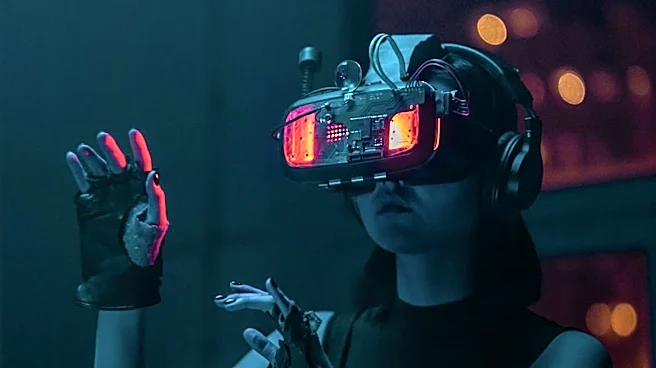
covers the company's pressure-based gesture control technology, which allows for the measurement of gesture intensity, enabling continuous, dimmer-like control rather than simple on/off commands. This technology is an extension of a U.S.-granted intellectual property family that senses surface nerve conduction signals from the wrist to translate hand and finger movements into digital commands without the need for cameras, controllers, or touchscreens. The company's product offerings, including the Mudra Band, Mudra Link, and Mudra Pro, utilize this neural input technology for intuitive control of digital devices across various operating systems. This allowance expands Wearable Devices Ltd.'s patent portfolio, which now includes 14 patent matters across the United States, China, and South Korea, with six already granted. The protection for these patents extends as late as 2043, with priority dates as early as 2015.
Why It's Important?
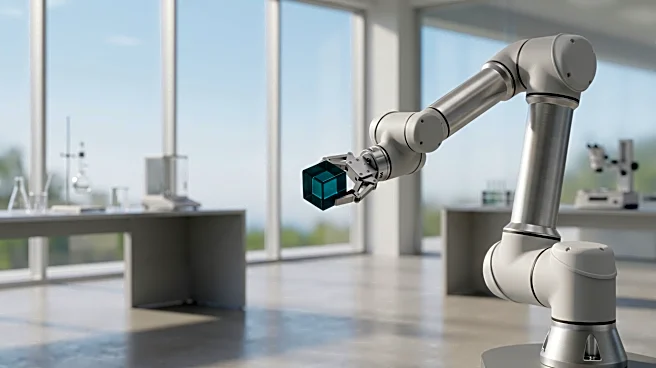
This patent allowance in China is strategically significant for Wearable Devices Ltd. and the broader technology market. China represents the world's largest developer, manufacturer, and market for robotics and consumer electronics, making intellectual property protection in this region crucial for market penetration and competitive advantage. The ability to measure the intensity of gestures, rather than just their presence, introduces a new level of nuance and naturalness to human-computer interaction. This advancement is particularly important for emerging fields such as physical AI and robotics, where machines can learn physical tasks from human demonstrations by capturing the force and motion applied by an individual. By enabling bare-handed, natural interaction without cumbersome instrumented gloves or force-sensing rigs, the technology could accelerate the development and adoption of more intuitive control systems in various industries. Furthermore, securing this patent strengthens the company's position for future licensing and partnership opportunities, potentially influencing the design and functionality of next-generation consumer electronics and extended reality (XR) devices globally.
What's Next?
Wearable Devices Ltd. plans to continue pursuing intellectual property protection across major markets, aligning with its long-standing IP strategy to support future licensing and partnership opportunities. The company's focus on neural input technology and its expansion into physical AI suggest ongoing innovation in human-computer interaction. The granted patent in China could lead to increased adoption of its technology by manufacturers in the region, potentially integrating pressure-based gesture control into a wider range of consumer electronics, XR devices, and robotics. As the company operates through both direct-to-consumer sales and enterprise licensing, this patent could open doors for new collaborations with Chinese tech companies. The development of more natural and intuitive control mechanisms is expected to drive further advancements in gaming, productivity, and immersive environments. The company's ai6 Labs ecosystem is also poised to accelerate this vision by integrating research, products, and AI breakthroughs, indicating a continuous push for innovation in the wearable technology space.
Beyond the Headlines
The allowance of this patent highlights a broader trend towards more seamless and intuitive human-computer interaction, moving beyond traditional touchscreens and controllers. The ability to interpret the 'how' of a gesture—its intensity and nuance—rather than just the 'what' could fundamentally change how humans interact with digital and physical systems. This shift has profound implications for accessibility, allowing for more natural control for individuals with varying physical capabilities. Ethically, as AI-powered wearables become more sophisticated in interpreting human intent from physiological signals, questions may arise regarding data privacy and the extent to which such devices can infer user states. Legally, the expansion of patent portfolios in key global markets like China underscores the increasing importance of intellectual property in the rapidly evolving tech landscape, potentially leading to more complex patent disputes and licensing agreements. Culturally, as these technologies become more integrated into daily life, they could reshape our understanding of human-machine interfaces, making technology feel less like a tool and more like an extension of ourselves, influencing how we work, play, and interact with our environment.