







What's Happening?
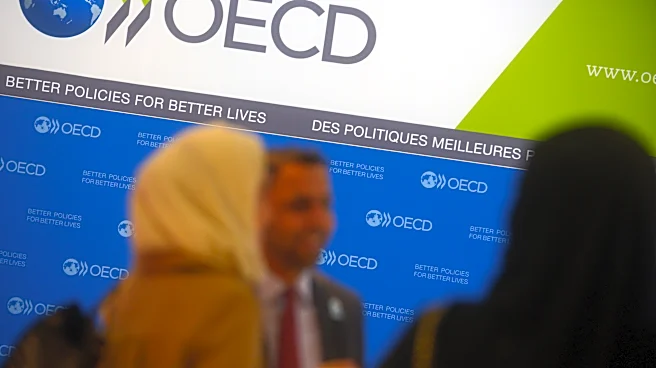
Indonesia officially signed the Multilateral Competent Authority Agreement on the Exchange of GloBE Information (GIR MCAA) on October 27, 2026. This development was confirmed by the OECD, which published an updated list of signatories. The GIR MCAA is designed
to facilitate the automatic exchange of GloBE (Global Anti-Base Erosion) information between tax administrations worldwide. Its primary objective is to minimize the compliance burden for multinational enterprise (MNE) groups by allowing them to centrally file their GloBE Information Return. With Indonesia's signature, the total number of countries and jurisdictions that have signed the GIR MCAA now stands at 41.
Why It's Important?
Indonesia's signing of the GIR MCAA is a significant step towards greater international tax transparency and cooperation. For the U.S., this agreement contributes to a more level playing field in global taxation, potentially reducing instances of tax avoidance by multinational corporations. As more countries adopt this framework, it becomes harder for MNEs to shift profits to low-tax jurisdictions, which can indirectly benefit the U.S. by encouraging domestic investment and ensuring fairer tax contributions from companies operating globally. The reduction in compliance burden for MNEs, while primarily benefiting the companies themselves, can also streamline international business operations, potentially fostering a more predictable and stable global economic environment. This move aligns with broader international efforts, often spearheaded by organizations like the OECD, to modernize tax systems and address the challenges of a globalized economy.
What's Next?
Following Indonesia's signing, the GIR MCAA will facilitate the automatic exchange of GloBE information between Indonesia and other signatory tax administrations. This means that multinational enterprise groups operating in Indonesia and other participating jurisdictions will be able to centrally file their GloBE Information Return, simplifying their tax compliance processes. The OECD will likely continue to encourage more countries to sign the agreement, further expanding the network of jurisdictions committed to automatic information exchange. The implementation of this agreement will require ongoing coordination among tax authorities to ensure smooth data exchange and consistent application of GloBE rules. Businesses, particularly MNEs, will need to adapt their internal reporting systems to comply with the new information exchange requirements.
Beyond the Headlines
The GIR MCAA is part of a larger global initiative to combat base erosion and profit shifting (BEPS) by multinational corporations. This agreement, alongside other international tax reforms, represents a fundamental shift in how corporate profits are taxed globally. It reflects a growing consensus among nations that traditional tax rules are no longer adequate for the digitalized and globalized economy. The ethical implications revolve around fairness in taxation and ensuring that large corporations pay their fair share, contributing to public services in the countries where they generate profits. The long-term shift could be towards a more integrated and harmonized global tax system, reducing tax competition among nations and potentially leading to increased government revenues worldwide. This could also influence corporate strategies, encouraging MNEs to align their economic activities more closely with their declared tax jurisdictions.