







What's Happening?
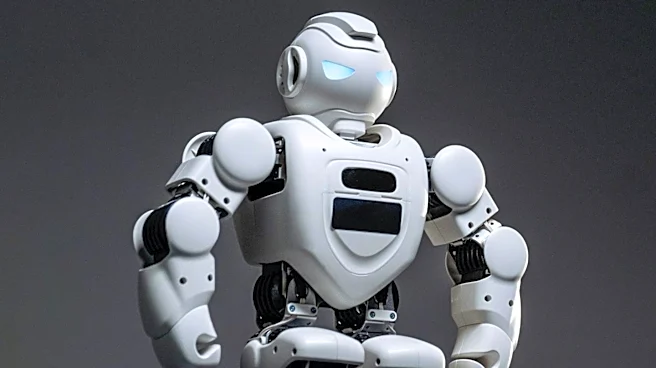
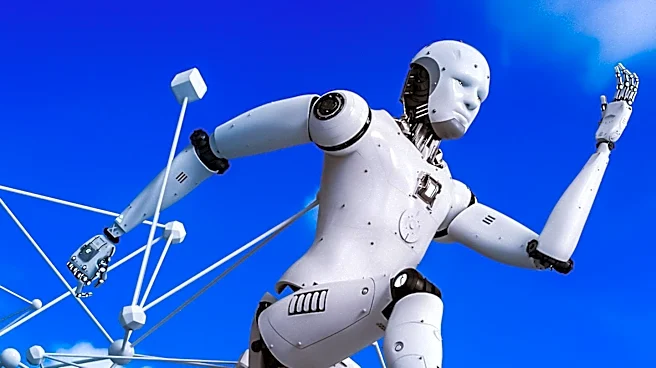
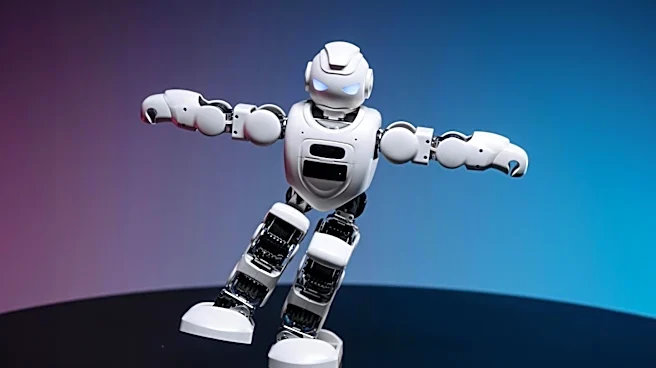
The rise of humanoid robots in Silicon Valley has sparked a debate among investors about their practicality and future in the workforce. While companies like Agility Robotics are pushing forward with plans to integrate humanoid robots into various industries,
some investors remain unconvinced. Ajay Agarwal of Bain Capital Ventures and other investors argue that humanoid robots may be more of a novelty than a necessity, as they inherit the limitations of the human form. These investors are instead focusing on robots designed specifically for their tasks, such as wheeled robots for warehouses and other specialized environments. Despite skepticism, the market for humanoid robots is growing, with significant investments and projections of a $5 trillion market by 2050.
Why It's Important?
The skepticism surrounding humanoid robots highlights a critical discussion in the tech industry about the future of automation and robotics. If humanoid robots can effectively integrate into human-centric environments, they could revolutionize industries by providing a tireless workforce. However, the debate underscores the importance of designing robots that are fit for purpose rather than adhering to human-like forms. This could influence the direction of future investments and technological developments in robotics, impacting sectors like manufacturing, logistics, and healthcare. The outcome of this debate could determine which companies lead the next wave of innovation in robotics.
What's Next?
As the industry continues to evolve, companies like Agility Robotics and others will need to demonstrate the practical applications and benefits of humanoid robots to gain broader investor confidence. The focus will likely be on proving the efficiency and safety of these robots in real-world settings. Meanwhile, investors may continue to support alternative robotic forms that offer more immediate and tangible benefits. The ongoing development and deployment of humanoid robots in various sectors will be closely watched to assess their impact and viability in the market.