








What's Happening?
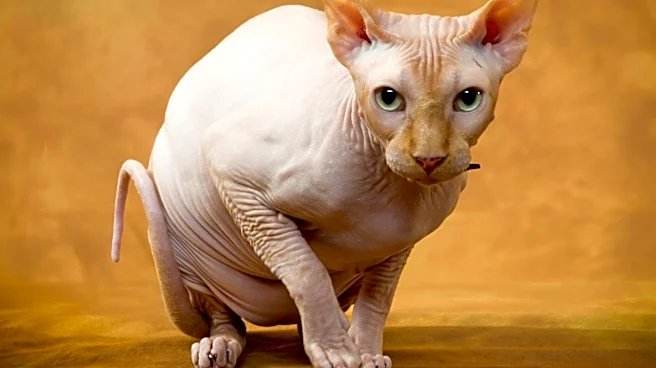
A recent report details the diverse world of 'hairless' cat breeds, extending beyond the commonly known Sphynx. While the Sphynx is often the first image that comes to mind, the article highlights nine distinct breeds, many of which are not entirely bald
but possess fine fuzz or patches of fur. These breeds include the Peterbald, known for its varied coat types that can change over time; the Donskoy, a Russian breed genetically distinct from the North American Sphynx; and newer hybrids like the Bambino, Elf, Dwelf, Minskin, and Ukrainian Levkoy, each with unique physical traits resulting from specific cross-breedings. The Lykoi, often called a 'wolf cat,' is also featured for its distinct roan coat. The International Cat Association (TICA) and the Cat Fanciers' Association (CFA) recognize many of these breeds, though newer hybrids may have more limited recognition.
Why It's Important?
This information is important for prospective cat owners and the pet industry in the U.S. as it sheds light on the specific care requirements and genetic diversity within hairless cat breeds. Unlike their furry counterparts, these cats often require specialized care, including regular skin and ear cleaning, protection from temperature extremes, and consistent veterinary attention due to their lack of a conventional coat. For example, Lisa Park, owner of a flock-coated Peterbald named Gren, describes a routine involving daily eye and ear wipes, occasional baths, and a small heater to maintain comfort. This highlights that owning a hairless cat is not a low-maintenance option, challenging common misconceptions. Understanding these needs can help reduce instances of neglect or improper care, ensuring the well-being of these unique animals and informing responsible breeding practices.
What's Next?
For individuals considering owning a hairless cat, the next step involves thorough research into the specific breed's care requirements and temperament. Given that many of these breeds are relatively new hybrids, potential owners should be aware that recognition status can vary among registries, which might impact access to breed-specific information or support networks. Breeders and veterinary professionals will likely continue to educate the public on the unique needs of these cats, emphasizing the importance of understanding their genetic traits and potential health considerations. The ongoing development of new hybrid breeds also suggests a continued evolution in the diversity of hairless cats, necessitating updated guidelines and resources for their care.
Beyond the Headlines
The emergence and popularization of diverse hairless cat breeds, particularly newer hybrids, raise broader discussions about ethical breeding practices and the welfare implications of selective breeding for specific aesthetic traits. While these cats offer unique companionship, their specialized care needs underscore the responsibility of breeders to prioritize health and well-being over novelty. The varying recognition status among major cat registries for newer hybrids also highlights a dynamic tension between established breed standards and the continuous introduction of new genetic combinations. This trend could lead to increased awareness and demand for specialized pet products and veterinary services tailored to the unique dermatological and thermoregulatory needs of hairless cats, influencing the pet care market.