




What's Happening?
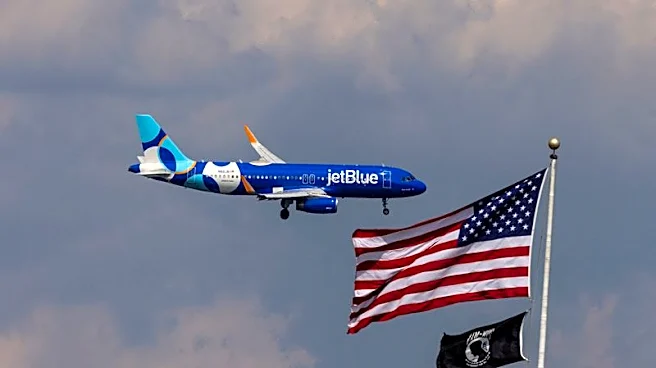
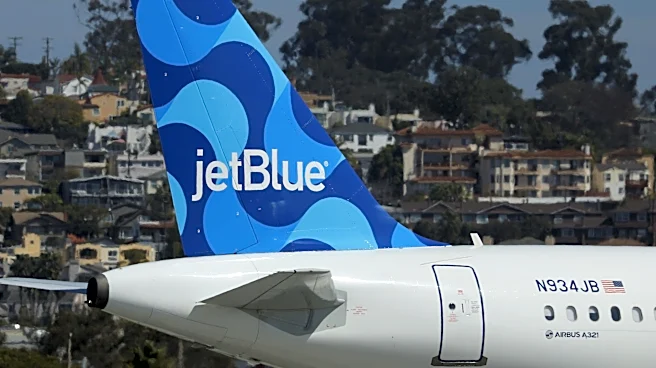
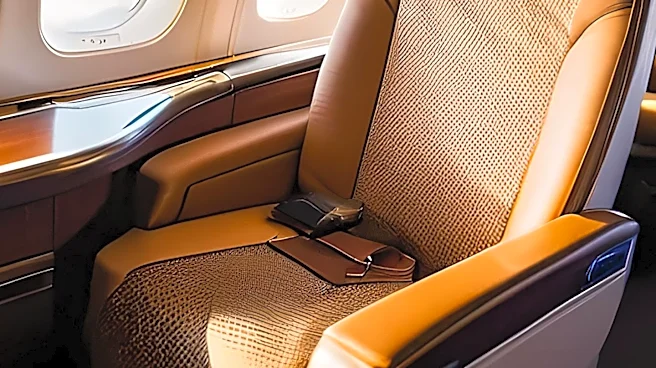
JetBlue Airways has introduced its new domestic first-class seats, branded 'BlueFirst,' at John F. Kennedy International Airport. This move is a key component of the airline's strategy to return to profitability, betting on the growing demand for premium
travel. The new first-class cabin will feature 12 seats on its Airbus A320 fleet, alongside 30 extra-legroom seats, a reduction from the previous 42 extra-legroom options. The airline plans to begin flying aircraft with these new seats and a full onboard product next month, with retrofits continuing throughout 2027. JetBlue last reported a profit in 2019 and has been working to stabilize its financial position. CEO Joanna Geraghty recently addressed investor concerns, stating that the company has no plans for bankruptcy and is not engaged with any restructuring firms, despite earlier reports of bondholders contracting restructuring advisors. The airline's shares have seen a significant rebound, increasing by over 40% this month.
Why It's Important?
This strategic shift by JetBlue into the domestic first-class market signifies a broader trend within the airline industry to capitalize on resilient premium travel demand. By offering 'BlueFirst,' JetBlue aims to attract higher-paying customers, which is crucial for improving its revenue streams and achieving its financial targets. The airline's turnaround plan projects an operating profit next year and $1 in adjusted earnings per share by 2028. This move could intensify competition in the premium domestic travel segment, potentially influencing pricing and service offerings across other carriers. For JetBlue, success in this venture is vital for regaining investor confidence and demonstrating the effectiveness of its new leadership's strategy. The emphasis on premium offerings also reflects an industry-wide acknowledgment that while overall travel demand is strong, the willingness of passengers to pay for enhanced comfort and services remains a significant profit driver.
What's Next?
JetBlue plans to commence flights with the new 'BlueFirst' seats and full onboard product next month, with the retrofit process for its Airbus A320 fleet continuing through 2027. The airline will be closely monitoring the performance and customer reception of these new premium offerings, particularly on popular leisure routes across Florida and the Caribbean. The success of this initiative will be critical in determining if JetBlue can achieve its stated goals of an operating profit next year and $1 in adjusted earnings per share by 2028. Investors and creditors will be watching for tangible improvements in financial results as the airline implements its turnaround plan. The company's ability to manage costs, including fuel, labor, and airport fees, while maintaining elevated fares, will also be a key factor in its path to sustained profitability.
Beyond the Headlines
JetBlue's pivot towards a more premium-focused domestic offering marks a significant evolution for an airline traditionally known for its value-oriented, yet amenity-rich, economy service. This strategic shift could alter its brand perception and customer base, moving it closer to legacy carriers in terms of product segmentation. The decision to invest heavily in first-class amenities, even with the operational challenges of not having ovens for hot meals, highlights the airline's commitment to capturing a lucrative market segment. This move also reflects a broader industry trend where airlines are increasingly differentiating their products to cater to diverse passenger needs and willingness to pay, rather than solely competing on price. The long-term implications could include a re-evaluation of JetBlue's network strategy and potential adjustments to its overall service model as it balances its historical brand identity with its new premium aspirations.