







What's Happening?
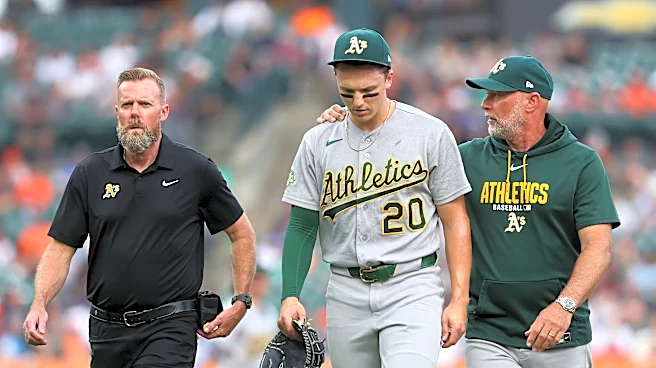
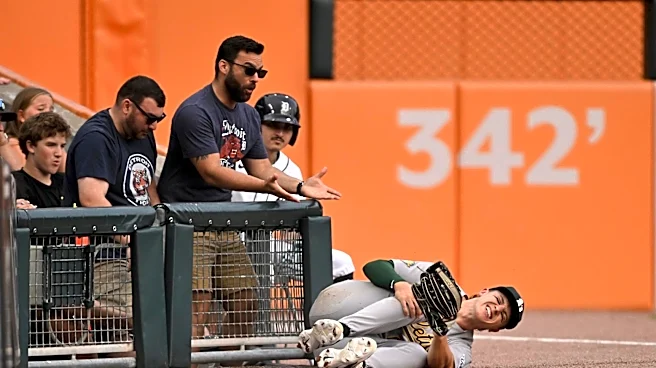
Oakland Athletics utility player Zack Gelof has filed a lawsuit against the Detroit Tigers, Ilitch Holdings, and the Detroit-Wayne County Stadium Authority. The lawsuit seeks damages for a right knee injury Gelof sustained after colliding with a metal
fence at Comerica Park during a game on July 9. Gelof was making a sliding catch in foul territory when his leg slammed into the fence, resulting in a deep cut under his right kneecap, narrowly missing a tendon. He was sidelined until August 10. Gelof's attorney, Jon Marko, stated that the injury could have been prevented with basic and inexpensive design measures, such as padding, which was installed after the incident. The Tigers have acknowledged the lawsuit but declined to comment on pending litigation. Gelof, 26, had a career-high season with 22 home runs and 55 RBIs in 111 games, splitting his time between the infield and outfield. The Athletics finished the season with a 64-98 record.
Why It's Important?
This lawsuit highlights significant concerns regarding player safety in professional sports venues and the potential liabilities faced by stadium owners and operating entities. The claim that a 'basic and inexpensive design' could have prevented a serious injury raises questions about the adequacy of current safety standards in MLB stadiums. A ruling in favor of Gelof could set a precedent for increased scrutiny of stadium infrastructure and potentially lead to mandatory safety upgrades across the league, impacting operational costs and design requirements for sports facilities. This case also underscores the financial and career implications for athletes who suffer injuries due to alleged negligence, affecting their performance, contract negotiations, and long-term health. The outcome could influence how teams and stadium authorities prioritize player well-being versus cost-saving measures, potentially shifting the balance towards more robust safety protocols to mitigate future legal challenges and protect player assets.
What's Next?
The lawsuit will proceed through the legal system, likely involving discovery, depositions, and potentially mediation or a trial. The Detroit Tigers and the other named defendants will need to formally respond to the allegations, presenting their defense regarding the safety of Comerica Park's facilities. The legal process could be lengthy, and the outcome will be closely watched by other professional sports organizations, stadium operators, and player associations. Depending on the court's decision, there could be calls for MLB to review and potentially mandate stricter safety guidelines for all ballparks, particularly concerning areas where players are likely to make contact with barriers. This could lead to industry-wide changes in stadium design and maintenance, aiming to prevent similar incidents and reduce the risk of player injuries.
Beyond the Headlines
Beyond the immediate legal and financial implications, this case touches upon the broader ethical responsibilities of sports organizations to ensure the safety of their athletes. The attorney's comment about a 'little league diamond' being safer than a professional stadium raises a stark comparison, challenging the perception of professional sports as being at the forefront of player protection. This incident could spark a wider conversation about the balance between the spectacle of sports and the inherent dangers faced by players, especially when preventable hazards are identified. It may also influence public perception of team ownership and management, emphasizing the need for proactive safety measures rather than reactive responses after an injury occurs. The long-term cultural shift could see a greater emphasis on player advocacy for safer working conditions, potentially leading to collective bargaining agreements that include more stringent safety clauses and independent oversight of stadium facilities.