





What's Happening?
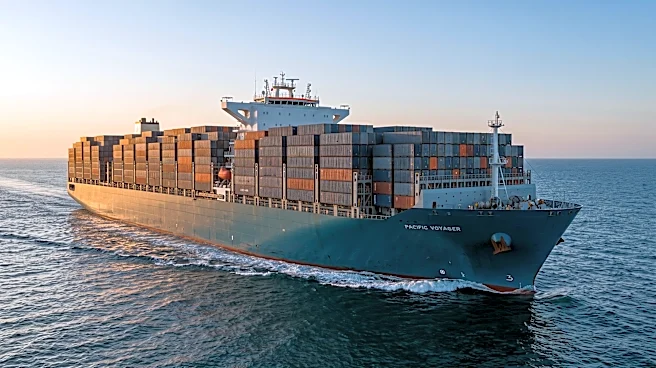
Ocean Network Express (ONE) and the classification society ClassNK have launched a collaborative research project to assess the effectiveness of roll damping tanks (RDTs) on large container ships. The study will utilize real-world operational data from
ONE's fleet, which ClassNK will then combine with numerical simulations to quantify the performance of these tanks in reducing vessel roll. RDTs mitigate a ship's rolling motion through the controlled movement of liquid within a tank. While this technology has been employed in passenger and specialized vessels for an extended period, its adoption in container ships has seen a recent increase. The companies noted that previous evaluations of RDT performance on large container ships primarily relied on model testing and numerical simulations, with limited full-scale verification under actual operating conditions. Excessive rolling can exert significant forces on containers and their securing systems, and this research aims to determine if optimizing RDT performance can enhance cargo safety, improve vessel operations, and increase container stowage efficiency and loading capacity.
Why It's Important?
This joint research is significant for the maritime industry, particularly for the safety and efficiency of global container shipping. Large container ships are susceptible to excessive rolling, which can lead to cargo damage, container loss, and pose risks to vessel stability and crew safety. By providing full-scale verification of roll damping tank effectiveness under actual sea conditions, this project aims to establish a more reliable basis for evaluating RDT performance. This could lead to improved design and implementation of RDTs, ultimately enhancing cargo safety and operational reliability across the container shipping sector. For U.S. businesses and consumers, a more stable and secure shipping environment means reduced risks of supply chain disruptions, lower insurance costs for cargo, and potentially more efficient transportation of goods. The findings could also influence international maritime regulations and best practices for vessel design and operation, benefiting the broader global trade network.
What's Next?
ONE will continue to provide onboard measurement data from its vessels to ClassNK. ClassNK will then proceed with the analysis, combining this real-world data with numerical simulations to quantify the roll reduction performance of the RDTs. The findings from this research are expected to provide practical insights into optimizing RDT performance, which could lead to new guidelines or recommendations for the design and operation of large container ships. The collaboration aims to contribute to safer and more efficient vessel operations by establishing a reliable basis for evaluating RDT performance under actual operating and sea conditions. This could result in the development of enhanced cargo securing systems, improved container stowage strategies, and potentially more flexible loading capabilities for container vessels in the future. The results may also be shared with the wider maritime community to promote best practices and advancements in ship stability.
Beyond the Headlines
The research into roll damping tanks reflects a broader industry effort to enhance maritime safety and operational resilience in the face of increasingly complex global supply chain demands and environmental challenges. Beyond the immediate benefits of cargo safety, improved vessel stability can also contribute to fuel efficiency by reducing the need for corrective maneuvers and potentially allowing for more optimal routing. This initiative highlights the critical role of collaboration between shipping companies and classification societies in driving innovation and setting new standards for the industry. The insights gained could also inform the development of autonomous shipping technologies, where precise control over vessel motion will be paramount. Ultimately, this research contributes to a more robust and sustainable maritime transport system, which is vital for global commerce and economic stability, including for the U.S. economy that heavily relies on international trade.