




What's Happening?
China is experiencing a significant rise in 'tech tourism,' where international visitors are increasingly opting to tour advanced manufacturing facilities, robotics centers, and space launch sites instead of traditional tourist attractions. This trend,
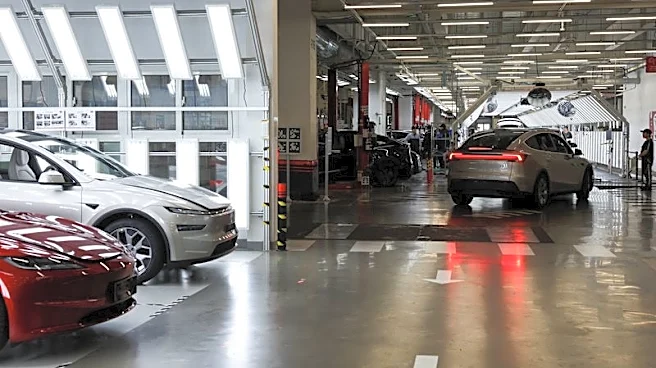
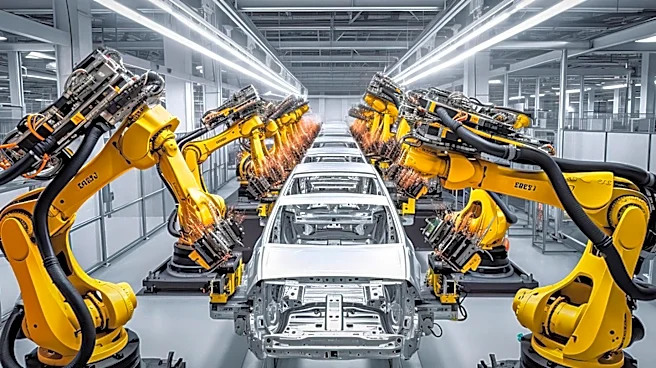
dubbed 'Chinamaxxing,' highlights global interest in China's technological advancements. For instance, the Xiaomi EV Super Factory in Beijing's Yizhuang district has become a highly sought-after destination, with a mere 0.08% acceptance rate for tour slots, making it more difficult to access than some top universities. Visitors are keen to observe human-machine collaboration on automated production lines, such as the giga-press that molds over 70 components in 100 seconds and the assembly line producing a new EV every 76 seconds. Additionally, the Unitree Robotics 'Embodied AI Experience Center' in Shanghai showcases humanoid robots and quadruped robotic dogs, attracting steady streams of international visitors. The Wenchang launch site in Hainan, China's only coastal, low-latitude launch site, has also gained international fame as a premier space-watching destination, drawing 'rocket chasers' from various countries.
Why It's Important?
The surge in tech tourism in China signifies a shift in global perception regarding the country's industrial capabilities. What was once associated with 'Made in China' meaning cheap goods is now being redefined by advanced manufacturing and technological innovation. This firsthand exposure allows industry professionals and investors to conduct on-the-ground due diligence, reassessing their own firms' global competitiveness after witnessing China's production capacity. The high demand for these tours, particularly from professionals and businesses, indicates a growing recognition of China as a leader in areas like electric vehicle manufacturing, robotics, and space technology. This trend could influence international business strategies, investment decisions, and technological collaborations, as global entities seek to understand and potentially integrate with China's advanced industrial ecosystem. The development of a supporting hospitality ecosystem around these tech tourism sites also demonstrates the economic impact and potential for further growth in this niche travel sector.
What's Next?
The trend of tech tourism is expected to continue growing, with travel agencies like Russia's 'Rocket Tour' planning to leverage visa-free travel policies to launch dedicated space-tourism itineraries. The increasing number of international visitors, particularly from Southeast Asia and Europe, suggests that more corporate tech tours will be organized, further solidifying China's image as a hub for advanced manufacturing and innovation. As more people experience China's industrial edge firsthand, it could lead to a recalibration of global assessments of its technological prowess. This could result in increased foreign investment in Chinese tech sectors, more partnerships between international and Chinese companies, and a greater exchange of technological knowledge. The transformation of embodied AI into a 'brand-new consumer lifestyle category' through experience centers also indicates a future where advanced robotics become more integrated into public life and consumer experiences.
Beyond the Headlines
Beyond the immediate economic and industrial implications, the rise of tech tourism in China carries deeper cultural and geopolitical significance. It represents a shift in how China is perceived on the global stage, moving from a manufacturing base to an innovation leader. This firsthand exposure to China's technological advancements can challenge existing narratives and foster a more nuanced understanding of its capabilities among international visitors. The phenomenon of 'Chinamaxxing' suggests a growing global curiosity and perhaps an acknowledgment of China's increasing influence in shaping future technologies. This could lead to a re-evaluation of international policies and collaborations, as countries seek to engage with China's technological ecosystem. The integration of advanced robotics into public spaces, as seen in the 'Embodied AI Experience Center,' also hints at a future where human-robot interaction becomes more commonplace, potentially influencing societal norms and expectations regarding technology.