




What's Happening?
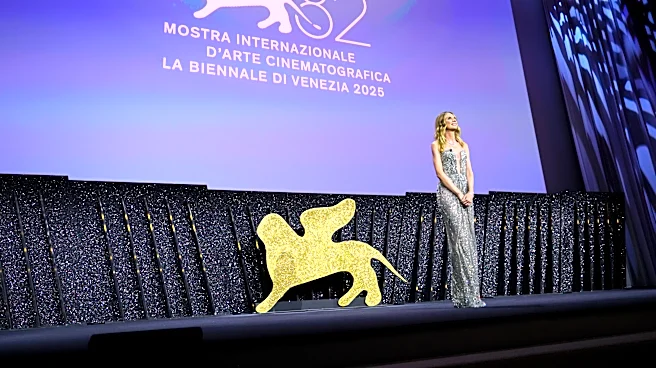
The 61st Venice Biennale has announced Chicago-based artist Nick Cave and India's national pavilion as the winners of its new 'Visitors’ Lions' awards. This development follows a significant controversy where the festival's women-led awards jury resigned
en masse. The jury's resignation occurred after they initially announced that countries facing accusations of crimes against humanity by the International Criminal Court, specifically Israel and Russia, would not be eligible for prizes. This decision led to dozens of artists withdrawing from award consideration in solidarity with the jury. The Biennale subsequently reversed the jury's decision and replaced the traditional Golden and Silver Lion awards with the 'Visitors’ Lions,' which are voted on by ticket-holders and awarded to the most popular pavilion and artist. The festival opened on May 9.
Why It's Important?
This event highlights the increasing intersection of international politics and the arts, particularly in major global cultural events. The controversy surrounding the Venice Biennale's awards, including the jury's resignation and the artists' boycott, underscores the pressure on cultural institutions to take stances on geopolitical issues. The shift from a jury-selected award to a public-voted 'Visitors’ Lions' could set a precedent for how major art festivals navigate politically charged environments, potentially democratizing the award process but also raising questions about artistic merit versus popular appeal. For artists and national pavilions, winning such an award, even under new circumstances, still offers significant international recognition and exposure, impacting their careers and national cultural profiles.
What's Next?
The implementation of the 'Visitors’ Lions' as a replacement for the traditional jury-selected awards may influence future iterations of the Venice Biennale and other international art festivals. It remains to be seen whether this new award structure will become a permanent fixture or if the festival will revert to a jury-based system in subsequent years. The art world will likely continue to debate the implications of political statements and boycotts on artistic freedom and the integrity of award processes. Future festivals may face similar pressures to address geopolitical conflicts, potentially leading to further changes in their operational and award-giving methodologies.
Beyond the Headlines
The controversy at the Venice Biennale reflects a broader trend of cultural institutions grappling with their roles in a politically polarized world. The decision to exclude certain countries from awards based on international legal accusations raises complex ethical questions about censorship, artistic freedom, and the responsibility of cultural events to remain neutral or take a moral stand. The shift to a public-voted award, while seemingly democratic, could also be interpreted as a way to sidestep difficult political decisions, potentially diluting the critical and curatorial authority traditionally associated with such prestigious events. This incident could prompt a re-evaluation of the governance and ethical frameworks within major international cultural festivals.