






What's Happening?
Rocket Lab is strategically expanding its launch infrastructure and vehicle architecture across the United States to capture a larger share of the domestic launch market. This dual-track strategy, led by Founder and Chief Executive Officer Peter Beck,
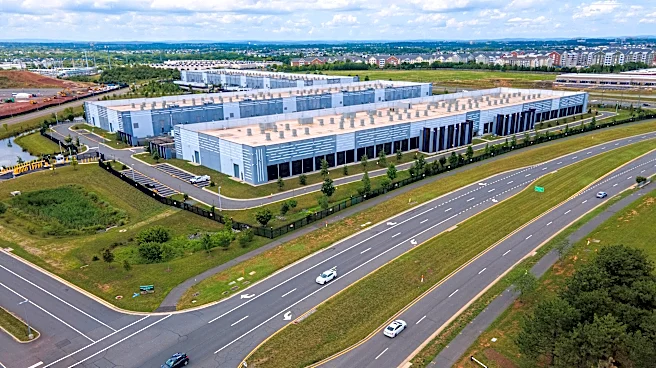
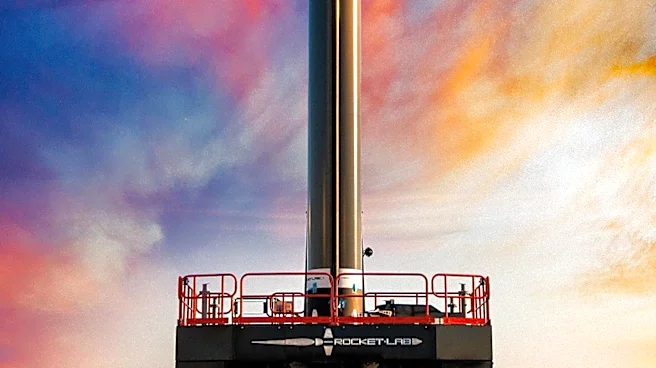
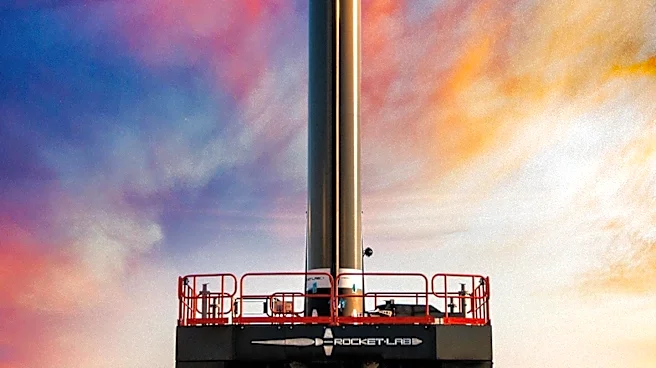
involves scaling terrestrial launch infrastructure and developing the medium-lift Neutron launch vehicle. The company operates Launch Complex 1 in New Zealand and Launch Complex 2 at the Mid-Atlantic Regional Spaceport on Wallops Island, Virginia, which includes dedicated assembly, integration, and test facilities, as well as the Neutron Production Complex. Rocket Lab is also establishing a long-term presence along the U.S. Eastern Range at Cape Canaveral Space Force Station and NASA’s Kennedy Space Center in Florida. This multi-site U.S. strategy aims to provide redundant launch infrastructure across distinct geographic regions, reducing single-point range bottlenecks and ensuring launch schedule flexibility for government and enterprise payload customers. The Neutron launch vehicle, a reusable, carbon-composite rocket, is designed to compete in the 13,000-kilogram payload class and features proprietary Archimedes engines and a unique 'Hungry Hippo' captive fairing design for reusability.
Why It's Important?
Rocket Lab's expansion is crucial for addressing domestic launch capacity constraints in the U.S. and diversifying access to space. The current market, facing a supply shortage and a shift away from subsidized pricing, creates a significant opportunity for providers like Rocket Lab. By establishing redundant launch infrastructure at key U.S. locations, the company enhances national security by ensuring reliable access to space for Department of Defense missions and reducing dependency on single launch sites. The development of the Neutron vehicle, with its focus on reusability and efficient manufacturing, aims to provide a cost-effective and reliable alternative for constellation operators and national security missions, mitigating schedule bottlenecks and single-source dependencies. This vertical integration strategy, extending to in-house satellite manufacturing and component supply, further strengthens the U.S. space industrial base by reducing reliance on external suppliers and fostering domestic technological capabilities. The Space Force's selection of Rocket Lab for the National Security Space Launch (NSSL) Phase 3 Lane 1 contract pool underscores the strategic importance of this expansion for U.S. defense and space initiatives.
What's Next?
Rocket Lab will continue to scale its launch infrastructure and advance the development of its Neutron launch vehicle. The company's focus will be on achieving higher flight frequencies and meeting national security requirements through its expanded U.S. footprint. The Wallops Island facilities will serve as the primary operational hub for upcoming medium-lift flight campaigns, while the presence at Cape Canaveral will provide access to critical equatorial and medium-inclination orbits for commercial communications satellites, deep space probes, and NSSL missions. The Neutron vehicle's flight qualification will be a key milestone, enabling Rocket Lab to bid on defense launches under the NSSL Phase 3 Lane 1 contract. The company's vertical integration strategy will continue to reduce dependence on external suppliers and enhance its position as an integrated space systems prime. As the broader space launch market undergoes a reset, Rocket Lab's strategic investments are poised to position it as a viable long-term provider, filling emerging capacity gaps and offering a reliable, reusable alternative for a wide range of space missions.
Beyond the Headlines
Rocket Lab's comprehensive strategy, encompassing both launch infrastructure and vehicle development, signifies a deeper trend towards resilience and self-sufficiency in the U.S. space sector. The emphasis on vertical integration, where the company produces flight software, reaction wheels, star trackers, and other components in-house, is not merely about cost reduction but also about supply chain security and control over critical technologies. This approach mitigates risks associated with geopolitical tensions and ensures the availability of essential components for U.S. space missions. Furthermore, the development of a reusable medium-lift rocket like Neutron, designed for rapid engine reuse and reduced overhaul cycles, represents a significant step towards making space access more routine and economically viable. This technological advancement, combined with a distributed launch footprint, contributes to a more robust and adaptable national space architecture, capable of supporting both commercial innovation and strategic defense objectives in an increasingly contested space domain. The long-term implications include fostering a more competitive and innovative U.S. space industry, less reliant on foreign capabilities and better equipped to meet future demands.