










What's Happening?
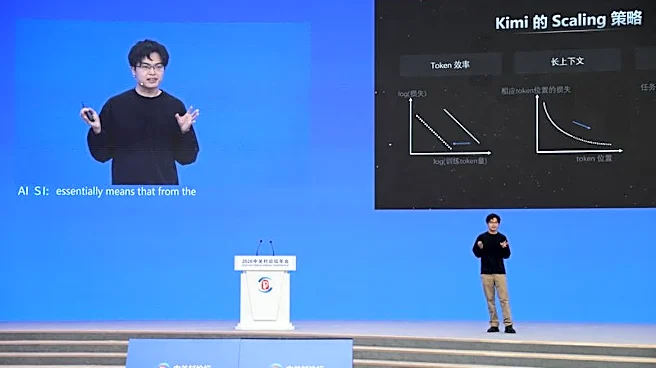
Moonshot AI, a Chinese startup, has introduced Kimi K3, an open-weight AI model that is drawing significant attention in Silicon Valley. The model boasts 2.8 trillion parameters, making it the largest open-weight AI model to date, and is particularly
strong in coding applications. Kimi K3 is priced competitively, offering lower costs compared to U.S. models like OpenAI's GPT-5.6 Sol and Anthropic's Claude Fable 5. This development is fueling debates about China's open-weight strategy and its potential to close the gap with U.S. proprietary models. The model's release is scheduled for July 27, allowing developers to modify and build upon it.
Why It's Important?
Kimi K3's introduction signifies a shift in the global AI race, with China's open-weight strategy gaining traction. This approach challenges the traditional proprietary models of U.S. companies, potentially altering the competitive landscape. The model's competitive pricing and performance could pressure U.S. firms to justify their premium pricing and proprietary strategies. The development raises questions about the U.S.'s ability to maintain its technological edge, especially if regulatory measures hinder innovation. The model's success could influence future AI development strategies and market dynamics.
What's Next?
The release of Kimi K3's model weights will be a critical moment, as developers and industry leaders assess its practical applications and performance. U.S. companies may need to adapt their strategies, possibly incorporating more open-source elements to remain competitive. The broader implications for the AI industry, including potential regulatory responses and shifts in market dynamics, will be closely watched. The outcome could shape the future of AI development and the balance of technological power between the U.S. and China.