



What's Happening?
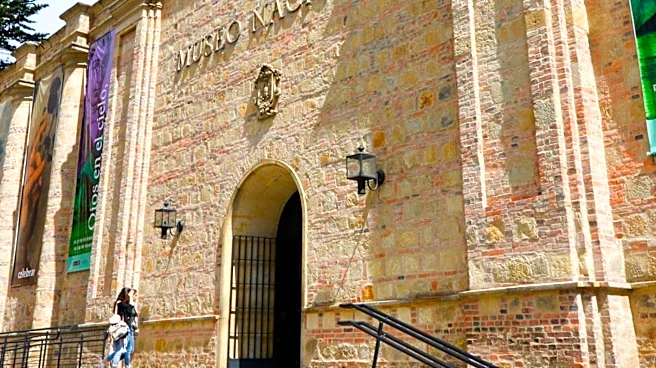
The National Museum of Mali, located in Bamako, serves as a central repository for the country's arts, textiles, and historical artifacts. The museum's collections offer insights into Mali's rich cultural heritage. It is highlighted as a significant cultural institution
within Mali, alongside other notable sites such as the Great Mosque in Djenné, historical Timbuktu, the Bandiagara Falaise in Dogon country, and the Askia Tomb in Gao. The museum is also mentioned in proximity to the FISH Mali (International Festival of Slam and Humour of Mali), suggesting its role in the broader cultural landscape of Bamako. The source emphasizes that while these landmarks are listed, visitors should verify local conditions and official advice before planning travel.
Why It's Important?
The National Museum of Mali plays a crucial role in preserving and presenting the nation's cultural identity and historical narrative. By housing collections of arts, textiles, and historical items, the museum contributes to the education of both Malian citizens and international visitors about the country's diverse heritage. Such institutions are vital for cultural preservation, especially in regions where historical artifacts might be vulnerable. The museum's presence in Bamako, the capital, positions it as a key cultural landmark that can attract tourism and foster a deeper understanding of Malian traditions and history. It also serves as a center for academic research and cultural exchange, reinforcing Mali's position as a culturally rich nation.
What's Next?
As a national institution, the Mali National Museum is expected to continue its mission of collecting, preserving, and exhibiting Malian cultural heritage. Future initiatives might involve expanding its collections, developing new exhibitions, or engaging in educational programs to reach a wider audience. Its proximity to other cultural events like the FISH Mali festival suggests potential collaborations to enhance cultural offerings in Bamako. Ongoing efforts would likely focus on maintaining the museum's facilities and ensuring the accessibility of its collections to the public, while also adapting to modern museum practices and conservation techniques to safeguard Mali's invaluable artifacts for future generations.
Beyond the Headlines
The existence and function of the National Museum of Mali reflect a broader commitment to cultural memory and national identity. In a country with a complex past and diverse ethnic groups, the museum acts as a unifying force, showcasing the shared heritage that binds the nation. It also serves as a critical educational resource, helping to transmit knowledge about Malian history and artistic traditions to younger generations. Furthermore, the museum's role in presenting Malian culture to the world contributes to international dialogue and understanding, challenging stereotypes and promoting a nuanced appreciation of the country's rich contributions to global heritage. Its continued operation is a testament to the enduring value placed on cultural preservation.