






What's Happening?
Guillermo Rodriguez, known from ABC’s “Jimmy Kimmel Live!”, has launched his own refrigerated salsa brand, Guillermo’s, which has quickly gained traction in the U.S. market. The brand, co-founded with Chris Kirby (Ithaca Hummus founder) and Leo Chris Kasuya,
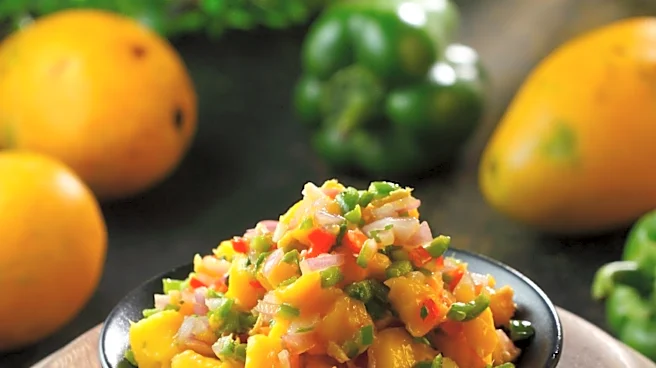
emphasizes fresh, authentic ingredients and consistent texture through micro-dicing. Guillermo’s salsa is available in mild, medium, and hot varieties. The brand initially rolled out in January at Costco stores in the Northeast with a 26-oz medium tub, achieving over a million dollars in revenue in less than six weeks. Following this success, distribution expanded to Costco stores in the Southeast and Texas, and to Northeast grocery chains Price Chopper, ShopRite, and Tops, offering 14-oz tubs in all three varieties. A nationwide rollout to Kroger stores is also planned, making it the first retailer to carry Guillermo’s coast-to-coast. The salsas are produced at LiDestri Foods in Rochester, NY, utilizing high-pressure processing (HPP) for extended shelf life and food safety.
Why It's Important?
The rapid success of Guillermo’s salsa highlights several key trends in the U.S. food and beverage industry. Firstly, it demonstrates the significant impact of celebrity endorsement, particularly when combined with a high-quality product. While Guillermo Rodriguez's fame draws initial attention, the brand's focus on fresh, authentic taste is crucial for repeat purchases, as noted by co-founder Chris Kirby. Secondly, the brand's quick expansion into major retailers like Costco and Kroger underscores the demand for premium, refrigerated salsa, a category that is growing compared to traditional shelf-stable options. This indicates a consumer shift towards fresher, less processed food items. Thirdly, the strategic partnership with LiDestri Foods, which includes a dedicated production line and high-pressure processing, ensures scalability and product quality, addressing common challenges for new food startups. This success story could encourage other celebrities and entrepreneurs to enter the competitive food market, emphasizing product quality and strategic distribution alongside brand recognition.
What's Next?
Guillermo’s plans to continue its aggressive expansion, with a nationwide rollout to Kroger stores on the horizon. The brand aims to secure distribution in other major retailers, including Walmart, Target, Albertsons, Whole Foods, and Publix, which collectively account for 70% of refrigerated salsa sales. A partnership with an unnamed retailer is also planned for a nationwide promotion during the upcoming football season. Long-term, Guillermo’s aims to grow the refrigerated salsa category from its current $700 million to $1 billion, capturing 50% of that expanded market. This ambitious goal suggests a sustained focus on innovation and market penetration. The brand also intends to remain hyper-focused on salsas, positioning itself as a modern Hispanic foods company. This trajectory indicates a potential for significant disruption in the salsa market, challenging established brands and setting new standards for freshness and quality.
Beyond the Headlines
The success of Guillermo’s salsa transcends mere product sales, offering insights into the evolving landscape of consumer trust and brand authenticity. In an era saturated with celebrity-backed ventures, Guillermo’s differentiates itself by prioritizing product quality and taste, recognizing that celebrity appeal alone is insufficient for long-term success. This approach fosters genuine consumer loyalty, as customers are drawn in by the personality but retained by the product's merit. Furthermore, the brand's commitment to fresh, micro-diced ingredients and high-pressure processing reflects a broader consumer demand for transparency and naturalness in food. This trend challenges traditional food manufacturing practices and encourages a shift towards cleaner labels and less artificial ingredients. The brand's aspiration to become a 'modern Hispanic foods company' also speaks to the growing influence and purchasing power of diverse consumer segments, prompting the industry to offer more culturally relevant and authentic products. This venture could serve as a blueprint for future food startups, demonstrating how to effectively combine celebrity influence with a strong product foundation and strategic market entry.