



What's Happening?
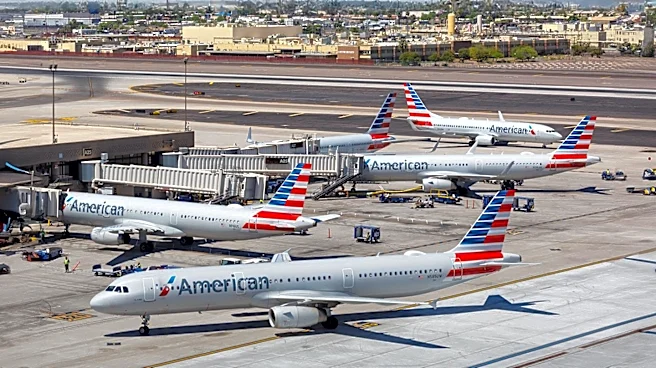
Flight attendants and pilots at American Airlines have intensified their demands for CEO Robert Isom to be replaced or fired, citing ongoing operational issues and a perceived lack of effective leadership. The Association of Professional Flight Attendants
(APFA) and the Allied Pilots Association (APA) collectively represent tens of thousands of American Airlines crew members and have criticized the airline's senior management. Their renewed calls follow a nationwide FAA ground stop on November 13, which, while not American Airlines' fault, exposed significant weaknesses in the carrier's contingency plans. In the aftermath, American Airlines canceled approximately 42% of its scheduled flights on November 14 and 22% on November 15, a performance significantly worse than rivals like Delta and United. Employees reported being stranded without adequate support or communication, highlighting what they describe as 'inadequate systems, staffing, planning, and leadership.' The APFA board previously issued a unanimous vote of no confidence in Isom in February, pointing to past business mistakes, such as the 'ill-fated Sun Belt strategy,' as reasons for their distrust in his leadership.
Why It's Important?
This renewed push for a change in leadership at American Airlines underscores significant challenges within one of the largest U.S. air carriers, impacting both its workforce and millions of passengers. The criticism from two major employee unions, representing a substantial portion of the airline's frontline staff, indicates deep-seated dissatisfaction that could affect morale, productivity, and ultimately, customer service. The operational failures highlighted, particularly in response to the FAA ground stop, suggest systemic issues that could erode public trust and competitive standing. If American Airlines continues to struggle with disruptions and employee relations, it risks losing market share to competitors like Delta and United, which demonstrated greater resilience during the same incident. The unions' assertion that 'a premium product requires a premium operation behind it' points to a fundamental disconnect between the airline's strategic investments in amenities and its core operational reliability. This situation could also influence labor negotiations and future industrial actions, potentially leading to further disruptions for travelers and financial repercussions for the company.
What's Next?
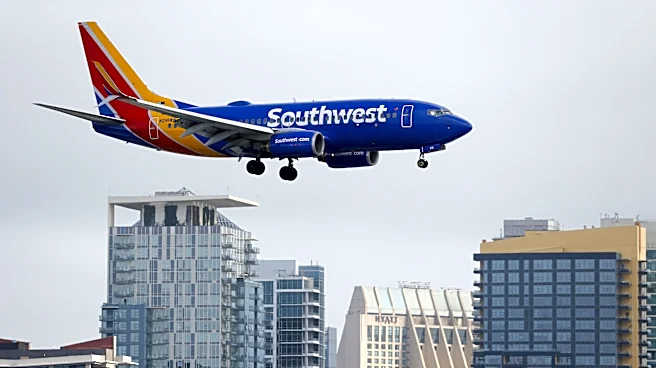
Despite the renewed calls for his removal, Robert Isom has secured the backing of American Airlines' board of directors. However, there have been recent changes within the management team, including the retirement of long-serving Chief Operating Officer Ian Seymour at the end of the year. While Isom publicly praised Seymour's efforts, questions about the airline's on-time performance persist. The APA, while not issuing a vote of no confidence, requested direct communication with the board regarding management, a request that was declined, with the board offering to send Isom instead. Speculation is also emerging that American Airlines may seek to hire an external candidate as president and potential successor to Isom before the year's end, with a candidate from Southwest Airlines being considered. This suggests that while Isom's immediate position may be secure, the board is actively considering succession planning and potential leadership adjustments to address ongoing concerns about the airline's operational performance and competitive standing.
Beyond the Headlines
The ongoing leadership crisis at American Airlines reflects a broader tension within the airline industry between strategic vision and operational execution. While the airline has invested in 'luxe airport lounges, premium seats, and upgraded services like ultra-fast Starlink internet,' these enhancements are perceived by employees as 'window dressing' if the fundamental operational infrastructure is lacking. This highlights a critical lesson for large service-oriented businesses: customer experience is not solely defined by premium offerings but by reliable and consistent service delivery, especially during disruptions. The situation also brings to light the power dynamics between corporate leadership and organized labor. The unions' persistent criticism, despite the board's support for Isom, indicates a deep-seated cultural issue that could hinder any top-down initiatives for improvement. The potential consideration of an external successor also suggests a recognition by the board that internal solutions may not be sufficient to address the airline's complex challenges, potentially signaling a shift towards bringing in fresh perspectives and operational expertise from outside the company's existing culture.