





What's Happening?
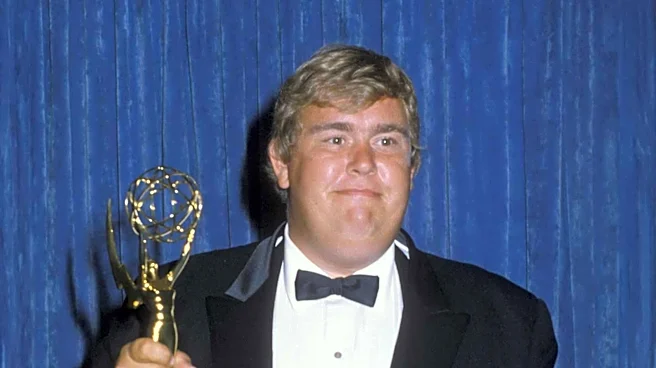
Rosemary Hobor, the wife of the late comedic actor John Candy, maintained a largely private life and pursued a career as a visual artist, specializing in painting and ceramics, despite her husband's international fame. Married from 1979 until Candy's
death in 1994, Rosemary and John raised two children, Jennifer and Christopher. Rosemary's artistic training at the Ontario College of Art and Design predated her marriage, and she continued to create art and teach techniques throughout her life, exhibiting her work in Toronto and later maintaining studios in Los Angeles. Her decision to remain outside the celebrity spotlight allowed her to cultivate her own identity and provide a private family life for Candy, who valued this separation from his public career.
Why It's Important?
This story is important as it sheds light on the often-unseen lives of spouses of public figures, particularly in the entertainment industry. It highlights how individuals like Rosemary Hobor actively choose to define their own identities and careers, rather than being solely identified by their famous partners. Her dedication to visual art, teaching, and maintaining a private family life underscores the challenges and choices faced by those connected to celebrity. It also provides a more complete picture of John Candy, revealing that behind his public persona as a beloved comedian was a man who cherished a grounded, private family life, supported by a wife with her own creative pursuits. This narrative offers a valuable perspective on balancing personal aspirations with the demands of a high-profile marriage.
What's Next?
While Rosemary Hobor has largely maintained her privacy, her participation alongside her children, Jennifer and Christopher, in the documentary 'John Candy: I Like Me' suggests a willingness to share aspects of their family life to honor John Candy's legacy. This could lead to a deeper public understanding of the man behind the comedic roles and the family that supported him. Future projects or retrospectives on John Candy's life may continue to feature insights from Rosemary and their children, further enriching the narrative of his personal and professional journey. Her continued artistic work, though private, contributes to the broader art community, and any future exhibitions or recognition of her art would further solidify her independent identity.
Beyond the Headlines
The story of Rosemary Hobor and John Candy delves into the broader societal implications of celebrity and privacy. It explores the ethical considerations of media intrusion into the lives of public figures' families and the deliberate choices individuals make to protect their personal spheres. Rosemary's commitment to her art, independent of her husband's fame, serves as a powerful example of self-definition and resilience. It also highlights the often-overlooked contributions of partners who provide stability and normalcy for those in demanding public careers. This narrative encourages a more nuanced view of celebrity relationships, moving beyond superficial portrayals to recognize the complex interplay of personal ambition, family values, and the pursuit of individual passions amidst public life.