






What's Happening?
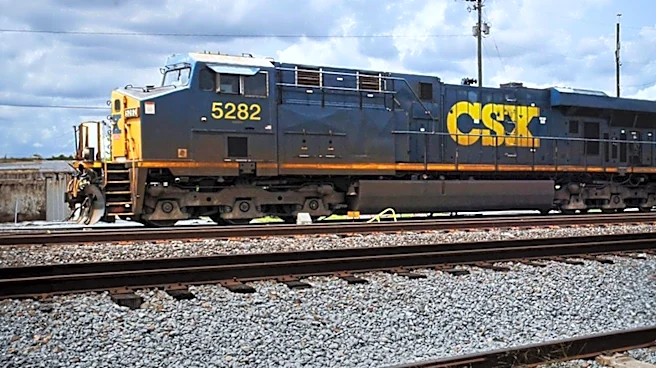
CSX Corporation has upgraded its guidance for 2026, projecting high-single-digit revenue growth, an operating margin expansion exceeding 350 basis points, and free cash flow growth over 80%, while keeping capital spending below $2.4 billion. This positive
outlook is primarily driven by strong performance in intermodal services, fueled by the ongoing shift of freight from trucks to rail and the expansion of intermodal capacity through completed infrastructure projects like the Howard Street Tunnel. The company's strategic positioning, with a 20,000-mile rail network across the eastern U.S. and parts of Canada, provides a significant competitive advantage. CSX attributes its improved financial health to over 100 efficiency initiatives, record fuel efficiency, and a $670 million locomotive modernization program with Wabtec, all contributing to sustained margin expansion. Despite a generally constructive outlook from analysts, some caution remains regarding valuation and risk-reward.
Why It's Important?
CSX Corporation's upgraded guidance signals robust health within the rail industry, indicating a broader economic trend of increased freight movement and efficiency. The shift from truck to rail transportation is significant for several reasons: it can lead to reduced carbon emissions, lower transportation costs for businesses, and alleviate highway congestion. This momentum suggests that investments in rail infrastructure, such as intermodal capacity expansion, are yielding positive returns. For investors, CSX's strong financial projections, including substantial free cash flow growth and a $5 billion share repurchase authorization, point to potential shareholder value creation. The company's focus on operational fluidity and cost leverage, through initiatives like the 'ONE CSX' operating model and locomotive modernization, demonstrates a commitment to long-term sustainability and competitiveness against other Class I railroads and the trucking industry. This performance also reflects the broader economic activity, as the freight-rail sector is a direct proxy for the economy.
What's Next?
Investors and analysts will closely monitor CSX's upcoming earnings releases, particularly the fourth-quarter results, for further confirmation of margin improvement and sustained momentum. Guidance revisions have been a recurring catalyst in 2026, and future updates will be critical. The company's capital allocation strategy, including share buybacks and dividend growth, will remain a key focus. External factors such as fuel-price volatility and union wage increases will also influence cost-side variables. Structurally, the continued shift of freight from truck to rail, further expansion of intermodal capacity, and ongoing modernization of the locomotive fleet are themes to watch. Regulatory developments concerning rail safety, service standards, and labor agreements could also impact CSX's operations and financial performance. The company's ability to sustain productivity momentum beyond 2026 will be a central long-term question.
Beyond the Headlines
CSX's performance reflects deeper structural changes in the logistics and supply chain sectors, where efficiency and cost-effectiveness are paramount. The emphasis on intermodal transport highlights a growing preference for integrated logistics solutions that leverage the strengths of both rail and truck transport. This trend could lead to further innovation in freight management and potentially reshape the competitive landscape of the transportation industry. The company's investment in locomotive modernization also points to broader technological advancements in rail, aiming for improved fuel efficiency and reliability, which has environmental benefits. Furthermore, the interplay between industrial production, consumer spending, and geopolitical developments underscores the rail sector's sensitivity to macroeconomic forces, making it a bellwether for economic health. The ongoing debate among analysts regarding valuation also signals the complexities of assessing long-term growth potential in a capital-intensive industry subject to cyclical economic pressures.