








What's Happening?
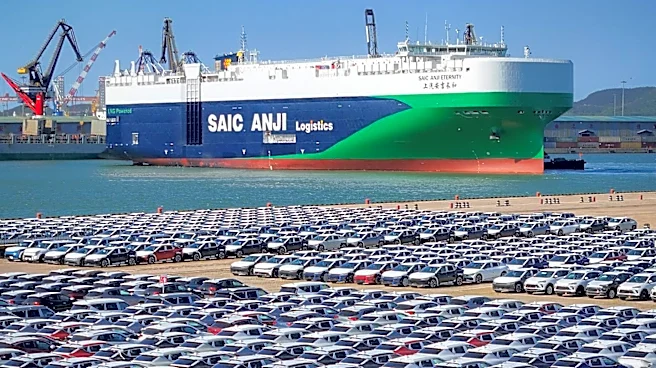
Wallenius Wilhelmsen has taken delivery of the Arctic Tern, a new Shaper Class vessel designed to operate on methanol, marking a significant step in the company's transition towards net-zero emissions. Built at China Merchants Jinlin Shipyard, the Arctic Tern is the first
of six 9,300 CET car carriers ordered by the company. The vessel features dual-fuel capability, allowing it to run on methanol, and incorporates advanced technologies to improve operational performance and efficiency. These include an Air Lubrication System, battery solutions for reduced energy consumption, and solar panels. The Arctic Tern is also equipped for shore power capability, enabling zero emissions while docked. The vessel will be operated by EUKOT Car Carriers, a joint venture between Wallenius Wilhelmsen and Hyundai Motor Group, and will initially sail from Asia to Europe.
Why It's Important?
The introduction of the Arctic Tern represents a pivotal moment for Wallenius Wilhelmsen and the broader car carrier industry as it aligns with global efforts to reduce carbon emissions in maritime transport. By adopting methanol as a fuel, the company is taking proactive steps to meet environmental regulations and customer demands for sustainable shipping solutions. This move not only enhances the company's competitive edge but also sets a precedent for other shipping companies to follow suit in adopting alternative fuels. The vessel's advanced design and technology are expected to significantly reduce operational costs and environmental impact, benefiting both the company and its clients.
What's Next?
Wallenius Wilhelmsen plans to continue its transition to alternative fuels, with several vessels in the Shaper Class being built ammonia-ready. This readiness will allow for conversion to ammonia fuel as soon as it becomes viable, further supporting the company's goal of offering net-zero end-to-end services by 2027. The successful deployment of the Arctic Tern may encourage other shipping companies to invest in similar technologies, potentially accelerating the industry's shift towards more sustainable practices.