





What's Happening?
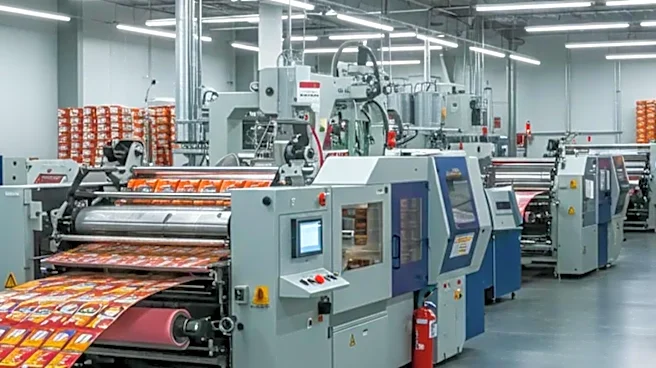
NAED Energy Holding Inc., an American energy-technology manufacturer, has unveiled its Helium series of continuous-Czochralski crystal-growth furnaces, the Helium F2 and Helium F4. These furnaces, designed and fabricated in the USA, are intended to work
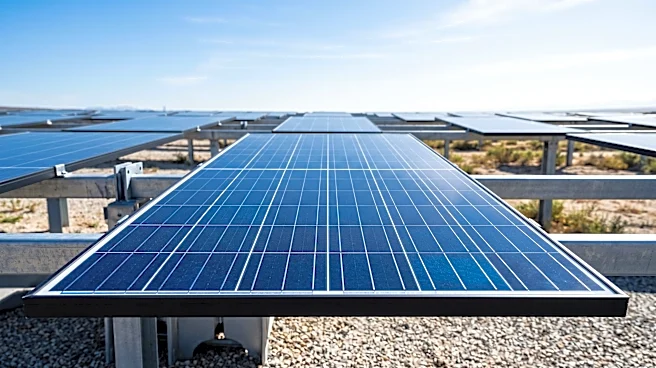
in conjunction with NAED’s PV-1 PECVD solar-cell line. This integrated system creates a domestic path from silicon feedstock to finished solar cells for both terrestrial and space applications. The company emphasizes its in-house component fabrication and a closed-loop silicon recycling process. Twelve patent-pending applications cover the furnace lines, protecting the continuous-Czochralski architecture and melt management systems.
Why It's Important?
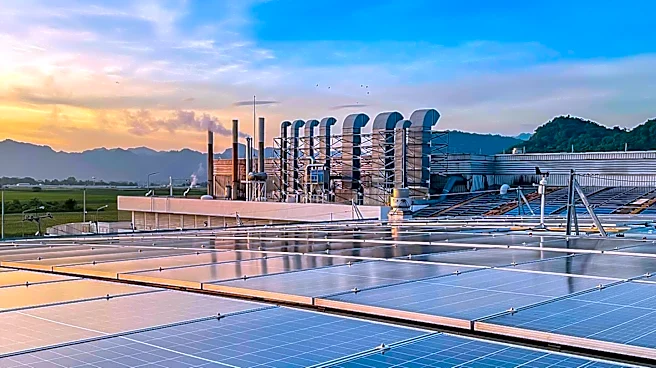
This development is crucial for the U.S. solar and semiconductor industries, as it establishes a fully domestic supply chain for monocrystalline silicon wafers and solar cells. By fabricating components in-house and avoiding imported parts, NAED Energy Holding Inc. addresses the growing demand for domestic-content documentation, particularly for government, defense, and utility-scale programs. This initiative enhances supply chain resilience, reducing reliance on foreign manufacturers and mitigating geopolitical risks. Furthermore, the production of space-grade, low-oxygen, radiation-tolerant silicon offers a cost-effective alternative for space-power and satellite builders, potentially boosting U.S. capabilities in space technology. The continuous-growth economics projected for the Helium F4 also suggest a competitive advantage in cost per wafer.
What's Next?
NAED Energy Holding Inc. is actively seeking engineering discussions with solar manufacturers, semiconductor producers, space-power developers, and satellite companies under non-disclosure agreements. This indicates a push towards commercialization and integration of their technology within the industry. The company's focus on providing a resilient, made-in-USA supply of monocrystalline wafers suggests that it aims to become a key supplier for domestic solar cell and module manufacturers. Future developments will likely include the deployment of these systems in manufacturing facilities, further scaling of production, and potential partnerships to expand the reach of their integrated silicon-to-cell chain. The emphasis on domestic content could also position NAED favorably for government contracts and initiatives aimed at strengthening U.S. manufacturing.
Beyond the Headlines
The introduction of NAED's integrated solar cell manufacturing path signifies a broader strategic shift towards re-shoring critical manufacturing capabilities in the U.S. This move is not just about economic competitiveness but also about national security, particularly concerning energy independence and defense applications. The closed-loop silicon recycling process highlights a commitment to sustainability and resource efficiency, which could set new industry standards. Moreover, the development of space-grade silicon domestically reduces vulnerabilities in the supply chain for sensitive space technologies. This initiative could inspire further investment and innovation in U.S. advanced manufacturing, fostering a more robust and self-reliant industrial base for renewable energy and high-tech sectors.