









What's Happening?
The IoT Edge Controllers market is projected to experience significant growth from 2026 to 2035, driven by the integration of industrial automation and artificial intelligence (AI) at the edge. According to a report, the market is expected to grow at a compound
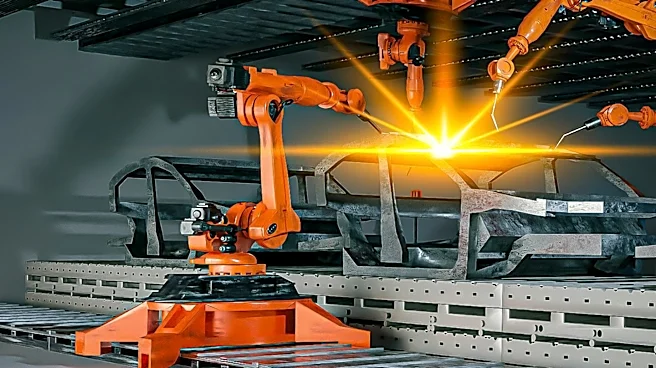
annual rate of 14-18%, surpassing traditional industrial control systems. This expansion is fueled by the convergence of operational and information technology, enabling real-time analytics and local decision-making. Key sectors driving demand include industrial automation, electronics manufacturing, and energy management. The Asia-Pacific region is a major production hub, while North America and Europe are significant consumers. The market is also seeing a shift towards edge controllers with AI capabilities and advanced connectivity, such as 5G and Wi-Fi 6/7. However, challenges like semiconductor supply constraints and price sensitivity in residential applications remain.
Why It's Important?
The growth of the IoT Edge Controllers market is crucial for advancing industrial automation and enhancing energy efficiency. As industries increasingly adopt smart technologies, the demand for real-time data processing and decision-making at the edge becomes vital. This trend supports the broader push towards Industry 4.0 and smart city initiatives, which aim to optimize resource use and improve operational efficiency. The integration of AI in edge controllers allows for predictive maintenance and anomaly detection, reducing downtime and maintenance costs. Additionally, the market's expansion aligns with global efforts to increase renewable energy adoption and improve energy management in buildings, contributing to sustainability goals.
What's Next?
The IoT Edge Controllers market is expected to continue its upward trajectory, with further advancements in AI and connectivity technologies. As industries invest in smart factory initiatives and renewable energy projects, the demand for sophisticated edge controllers will rise. Companies may focus on developing more cost-effective solutions to address price sensitivity in smaller applications. Additionally, regulatory requirements for cybersecurity and energy efficiency will likely drive innovation and adoption of secure, efficient edge controllers. The market's growth will also depend on resolving semiconductor supply issues and enhancing production capabilities in key regions.