





What's Happening?
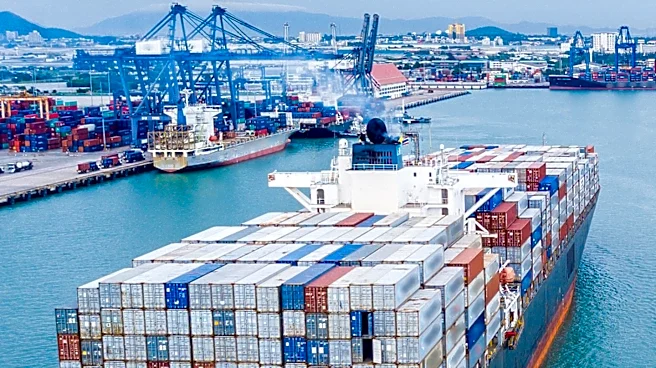
Container shipping rates from East Asia and China to the United States have increased this week. This surge is attributed to resilient demand and ongoing weather-related congestion at Asian ports. Rates to the U.S. West Coast are currently between $7,400
and $8,300 per forty-foot equivalent unit (FEU), while rates to the East Coast range from $9,600 to $11,500 per FEU. These figures are nearing the highs recorded in mid-2022. Peter Sand, chief analyst at Xeneta, suggests that this upward trend might be approaching its peak, potentially ending in the first half of October. Shippers are currently paying significantly more compared to July 1st, with a 31% increase ($2,691 per FEU) to the West Coast and an 18% increase ($1,280 per FEU) to the East Coast. Despite carriers managing capacity through blank sailings, Drewry expects rates to decline next week ahead of China's Golden Week holiday.
Why It's Important?
The rising container shipping rates directly impact U.S. businesses and consumers. Increased freight costs for goods imported from Asia can lead to higher prices for a wide range of products, contributing to inflationary pressures. This situation creates an uneasy environment for shippers preparing to tender for 2027 contract volumes, as current spot market rates are significantly higher than desired contracted rates. The chemical industry is also affected, as container vessels transport polymers and other chemicals in pellet form or isotanks. While most chemicals are shipped in tankers, the cost of container shipping for these specific products can influence supply chains and manufacturing costs within the U.S. The ongoing port congestion and strong demand highlight vulnerabilities in global supply chains, potentially leading to delays and increased inventory costs for U.S. companies.
What's Next?
Analysts anticipate a potential decline in container rates next week, primarily due to the upcoming Golden Week holiday in China, which typically reduces shipping activity. However, the long-term outlook remains uncertain, with factors like persistent weather-driven congestion at Far East ports and continued strong transpacific demand influencing the market. Shippers will need to carefully evaluate these disruptive factors and their implications for their transportation needs as they navigate future contract negotiations. The stability of chemical tanker rates ex-US Gulf suggests a more balanced market for liquid chemicals, but any shifts in container rates could indirectly affect the broader logistics landscape for the chemical industry. The market will closely watch for any further announcements regarding blank sailings or changes in port operations that could impact capacity and rates.
Beyond the Headlines
The current situation underscores the intricate interconnectedness of global trade and the significant impact of external factors, such as weather events and national holidays, on international shipping. The sustained high rates and congestion could prompt U.S. businesses to re-evaluate their supply chain strategies, potentially leading to diversification of sourcing or increased domestic production to mitigate risks associated with overseas shipping. This could also accelerate investments in port infrastructure and automation within the U.S. to enhance efficiency and reduce reliance on potentially congested foreign ports. The debate over the 'temporary' nature of current market conditions versus a more permanent shift in shipping dynamics will likely continue, influencing long-term investment decisions and trade policies.