






What's Happening?
Ørsted, a Danish energy infrastructure developer, announced third-quarter gross operating profit that surpassed analysts' expectations. The company's financial performance was significantly boosted by volatile gas prices in European markets, which increased
demand for renewable energy generation across the continent. This led to a more than 4% rise in Ørsted's share price on the Copenhagen Stock Exchange following the results. Earnings before interest, taxes, depreciation, and amortization (EBITDA), excluding new partnerships and termination fees, reached 5.26 billion Danish kroner (US$792.5 million), up from 3.06 billion kroner in the same period last year, exceeding the average market forecast of 4.42 billion kroner. The board confirmed its annual operating target above 28 billion kroner, indicating a recovery despite macroeconomic challenges in the offshore wind sector. However, management lowered its gross investment forecast for the full year to between 45 billion and 50 billion Danish kroner, from a previous range of up to 55 billion, due to rescheduled payments for shipbuilding projects. The company also recognized a non-cash impairment loss of 3.44 billion kroner on its U.S. asset portfolio, attributed to rising long-term interest rates in the North American market.
Why It's Important?
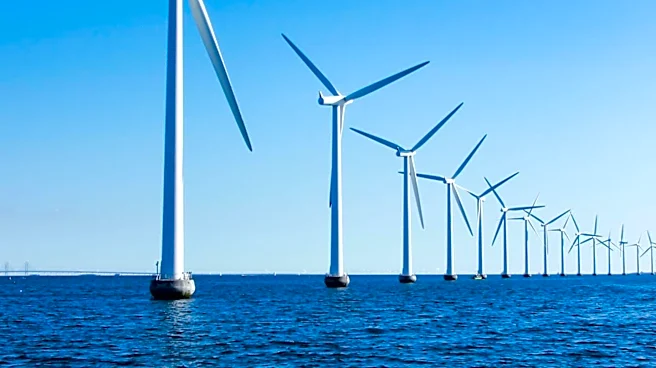
Ørsted's robust third-quarter performance underscores the growing importance and resilience of the offshore wind sector in the global energy transition, particularly in the U.S. market. The impairment loss on its U.S. assets due to rising interest rates highlights the financial sensitivities and challenges faced by large-scale renewable energy projects in the U.S., potentially impacting future investment decisions and project financing across the industry. Despite these challenges, the company's continued progress on projects like 'Revolution Wind' in the U.S. demonstrates a commitment to expanding renewable energy capacity. The alignment of government policies with decarbonization goals and energy security, driven by fluctuating fossil fuel prices, positions offshore wind as a critical component for diversifying national electricity mixes and reducing reliance on imported hydrocarbons. This trend could lead to increased government support and incentives for offshore wind development in the U.S., benefiting companies like Ørsted and contributing to the nation's energy independence.
What's Next?
Ørsted is continuing to optimize the engineering of its operational platforms to mitigate logistical bottlenecks, ensuring a stable revenue stream from its marine assets. The company's executive director, Rasmus Errboe, noted that fluctuating fossil fuel prices have accelerated political interest in consolidating indigenous electricity sources, suggesting a continued push for offshore wind development. The completion of the construction phase for the 'Revolution Wind' project in the U.S. is proceeding on schedule, indicating that the project will soon contribute to the company's operational revenue. The company's ability to maintain its annual operating target above 28 billion kroner suggests a focus on sustained operational recovery. Future developments will likely involve further adjustments to investment forecasts based on market conditions and the successful commissioning of ongoing projects, particularly in the U.S., where regulatory challenges and interest rate fluctuations remain key factors.
Beyond the Headlines
The non-cash impairment loss on Ørsted's U.S. asset portfolio due to rising long-term interest rates reveals a deeper financial vulnerability within the renewable energy sector. While the industry is crucial for climate goals, its capital-intensive nature makes it highly susceptible to macroeconomic shifts, particularly interest rate hikes. This could lead to a re-evaluation of risk and return profiles for future U.S. offshore wind projects, potentially slowing down development or increasing the cost of electricity for consumers. The resilience shown by Ørsted in the face of material inflation and financing costs also highlights the technical maturity and operational efficiency achieved by major renewable energy operators. This suggests that despite financial headwinds, the fundamental drive towards energy independence and decarbonization will likely continue to propel the sector forward, albeit with increased scrutiny on financial planning and risk management.