

What's Happening?
Lizzo, the American alternative hip hop artist, recently acknowledged T-Pain's significant influence on contemporary rap music during a livestream. She directly posed the question to T-Pain, asking if he realized that modern rap music, as it exists today,
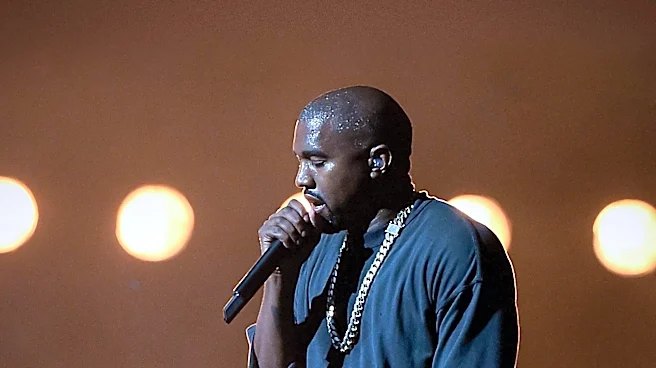
would not sound the same without his contributions. Lizzo highlighted his past use of Auto-Tune as a key factor in shaping the genre's sound. T-Pain, while acknowledging her point, clarified that Kanye West had used the technology before him, though he was instrumental in popularizing it in the early to late 2000s. His distinctive style, which incorporated Auto-Tune, led to numerous Hot 100 hits, including three No. 1s between 2007 and 2008, and a Grammy for 'Good Life' with Kanye West. Despite a period of backlash, Auto-Tune is now widely adopted across modern hip-hop by artists like Travis Scott and Ken Carson.
Why It's Important?
This recognition from Lizzo underscores the often-underestimated impact of artists and technological innovations on musical genres. T-Pain's popularization of Auto-Tune, initially met with criticism and even a diss track from Jay-Z, has fundamentally altered the sonic landscape of rap and R&B. His pioneering work paved the way for a new vocal aesthetic that is now commonplace, demonstrating how a once-controversial technique can become an integral part of a genre's evolution. This shift affects not only how music is produced and consumed but also influences the creative choices of new artists entering the industry. The conversation highlights the cyclical nature of musical trends, where innovation can initially face resistance before becoming widely accepted and even foundational.
What's Next?
The ongoing embrace of Auto-Tune in hip-hop suggests its continued presence and evolution within the genre. Pharrell Williams has challenged T-Pain to create more R&B music in his unique style, indicating a potential resurgence or re-evaluation of T-Pain's direct contributions to the R&B landscape. T-Pain's response, stating he will 'put my right brain on it,' hints at future music that will likely continue to utilize and perhaps further innovate with Auto-Tune. This could lead to new projects from T-Pain that further solidify his legacy and influence, potentially inspiring another wave of artists to explore the creative possibilities of vocal processing. The discussion also opens up broader conversations about the role of technology in music creation and the recognition of artists who push boundaries.
Beyond the Headlines
The dialogue between Lizzo and T-Pain touches upon deeper themes of artistic legacy, innovation, and the often-delayed recognition of groundbreaking contributions. It highlights how artists who introduce new sounds or techniques may initially face skepticism or criticism, only for their methods to become standard practice years later. This phenomenon is common in many creative fields, where the avant-garde eventually becomes mainstream. Furthermore, the conversation implicitly raises questions about the authenticity of vocal performance in an era of advanced digital tools. While some purists might lament the prevalence of Auto-Tune, its widespread adoption suggests a redefinition of what constitutes 'vocal talent' and 'artistic expression' in contemporary music production.