








What's Happening?
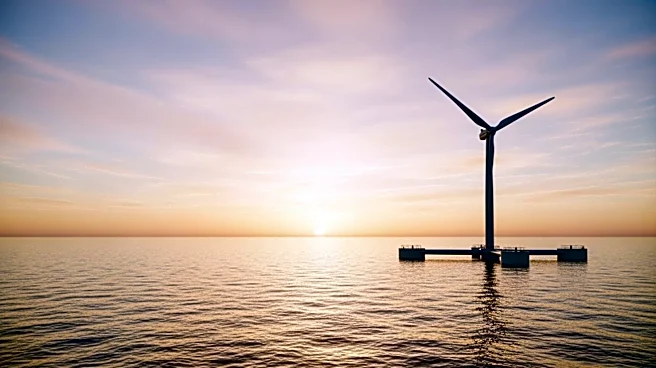
Floating offshore wind farms are emerging as a significant component of global wind power, leveraging the potential of stronger winds over deeper waters. According to the Global Offshore Wind Alliance, 27 countries have set offshore wind targets, with
at least seven specifically focusing on floating offshore wind. Japan's Goto Floating Wind Farm, with a capacity of 16.8 MW, marks a milestone in the country's goal to reach 15 GW of floating offshore wind capacity by 2040. France's pilot project, Éoliennes Flottantes du Golfe du Lion, began supplying power in May, setting the stage for larger developments in the Mediterranean Sea. The UK, Portugal, Norway, and Korea have also established floating wind targets for the next decade. As the technology transitions from pilot projects to commercial scale, turbine designs are evolving to address the dynamic forces of wind and ocean waves.
Why It's Important?
The development of floating offshore wind farms is crucial for meeting increasing global energy demands and reducing reliance on fossil fuels. These projects unlock access to consistent wind resources in deep waters, which are otherwise inaccessible to fixed-platform turbines. The expansion of floating wind technology could significantly contribute to renewable energy targets, helping countries reduce carbon emissions and transition to sustainable energy sources. However, the industry faces challenges such as high capital costs and supply chain disruptions, which could impact project timelines and costs. The success of these projects could lead to advancements in marine and energy technologies, fostering innovation and economic growth in the renewable energy sector.
What's Next?
As floating offshore wind technology advances, developers will focus on reducing the levelized cost of electricity (LCOE) and improving project economics. This includes enhancing the durability and efficiency of protective coatings to minimize maintenance and operating costs. The industry will likely see increased collaboration between marine and energy sectors to develop integrated asset protection strategies. As more countries adopt floating wind targets, the global market for these technologies is expected to grow, potentially leading to new partnerships and investments in renewable energy infrastructure.
Beyond the Headlines
The expansion of floating offshore wind farms could have broader implications for environmental sustainability and energy security. By tapping into deep-water wind resources, countries can diversify their energy portfolios and reduce dependence on imported fossil fuels. This shift could also drive job creation in the renewable energy sector, particularly in regions with suitable offshore conditions. Additionally, the development of floating wind technology may spur advancements in related fields, such as marine engineering and environmental protection, contributing to a more sustainable and resilient energy future.