





What's Happening?
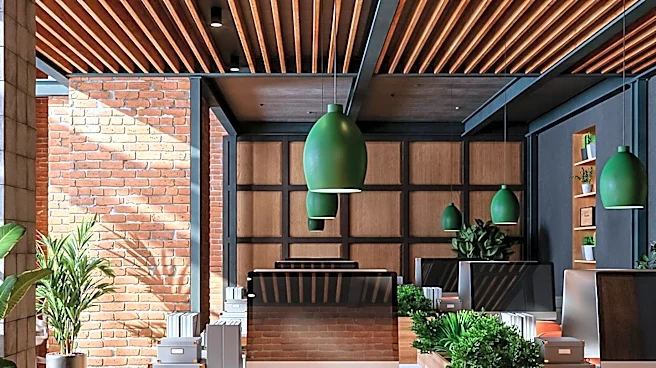
Baker McKenzie has unveiled its new office space in Warsaw, Poland, which occupies the top three levels of Varso Tower, spanning 43,055 square feet. The design, conceptualized by Baker McKenzie, is a unique fusion of New York's vibrant energy and Japan's
meticulous attention to detail. This innovative approach aims to create a workspace that exemplifies cultural synthesis and modern design. The interior incorporates natural elements such as stone and wood veneers, contrasted with vivid accents and Japanese motifs like cherry blossoms. The office features both open and private areas to support various work styles, along with tech-equipped phone booths and a mock courtroom. A bonsai-inspired installation is a central feature in the reception area, complemented by a desk crafted from Breccia Lunare marble and natural-fiber wallpaper. Polish artworks by Agata Bogacka, Roma Halat, and Xawery Wolski are integrated throughout the space, showcasing a diverse artistic lineage.
Why It's Important?
This office design by Baker McKenzie is important as it reflects a growing trend in corporate real estate to create workspaces that prioritize employee well-being, cultural integration, and functional adaptability. By blending distinct cultural aesthetics—New York's dynamism and Japan's elegance—the firm is likely aiming to foster a more inspiring and productive environment for its employees. This approach can enhance employee satisfaction and retention, which are critical factors in the competitive legal industry. The inclusion of diverse artistic elements and natural materials also suggests a focus on creating a calming yet stimulating atmosphere, potentially leading to increased creativity and reduced stress. For the U.S. legal sector, this could set a precedent for future office designs, emphasizing global influences and employee-centric spaces over traditional, often sterile, corporate environments. It also highlights the firm's commitment to its international presence and cultural understanding.
What's Next?
The success of Baker McKenzie's Warsaw office design could influence future corporate interior design trends, particularly within global law firms and multinational corporations. Other companies might observe the impact of this cultural synthesis on employee productivity and morale, potentially leading to similar design philosophies being adopted in their own offices, including those in the U.S. The firm may also use this office as a model for future renovations or new constructions in other international locations, further solidifying its brand image as an innovative and culturally aware employer. Additionally, the integration of local Polish art could inspire other international firms to incorporate local cultural elements into their global offices, fostering stronger ties with the communities in which they operate. The firm will likely monitor the long-term effects of this design on employee engagement and operational efficiency.
Beyond the Headlines
Beyond its aesthetic appeal, Baker McKenzie's Warsaw office design subtly communicates the firm's global identity and its commitment to diversity and inclusion. By intentionally merging design elements from New York and Japan, the office becomes a physical representation of cross-cultural collaboration, a core value for many international law firms. This approach can help attract a diverse talent pool that values such an inclusive and globally-minded work environment. Furthermore, the emphasis on natural elements and a calming atmosphere could be seen as a response to the increasing awareness of mental health and well-being in the workplace. This design could serve as a case study for how physical spaces can influence corporate culture and employee experience, potentially leading to broader discussions within the U.S. business community about the strategic importance of office design in fostering innovation and employee loyalty.