








What's Happening?
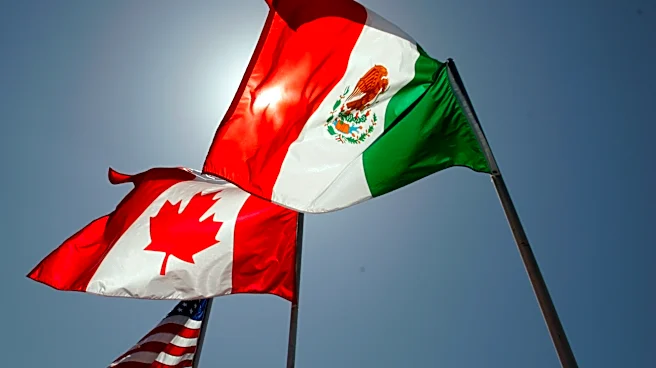
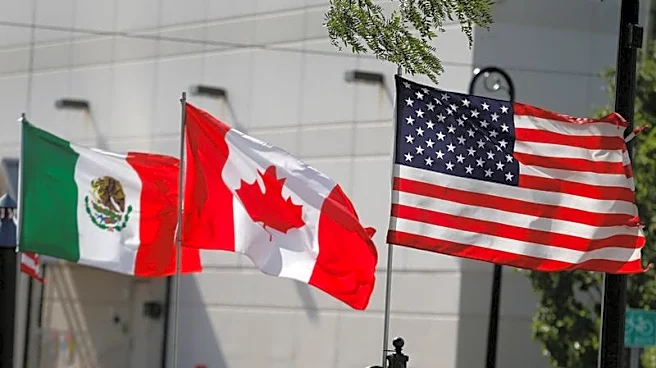
The United States is moving away from a long-term commitment to the United States-Mexico-Canada Agreement (USMCA) in favor of annual reviews and potential renegotiations. This shift in trade policy is causing investors to reassess their strategies, particularly
concerning companies involved in North American supply chains. The focus is now on U.S. domestic manufacturing stocks that exhibit strong business fundamentals and market resilience. Companies like Alamo Group, Franklin Electric, and Boise Cascade are highlighted as potential beneficiaries due to their robust financial health and strategic positioning within the U.S. market. These companies are seen as better equipped to handle the uncertainties brought about by the new USMCA review regime, given their domestic manufacturing focus and reduced exposure to cross-border trade frictions.
Why It's Important?
The shift to annual USMCA reviews introduces a new layer of uncertainty for businesses involved in North American trade. This change could significantly impact companies that rely heavily on cross-border supply chains, potentially leading to increased costs and operational challenges. However, it also presents an opportunity for U.S.-based manufacturers that are less dependent on international trade. Investors are likely to gravitate towards companies with strong domestic operations and financial stability, as these firms are perceived to be more resilient to policy changes. This focus on U.S. manufacturing stocks could lead to increased investment in the sector, potentially driving growth and innovation. Additionally, the emphasis on domestic production aligns with broader economic and political trends favoring local manufacturing and job creation.
What's Next?
As the USMCA review process unfolds, companies will need to adapt to the evolving trade landscape. Businesses with significant exposure to North American supply chains may need to reassess their strategies to mitigate potential risks associated with tariff changes and regulatory shifts. For investors, the focus will likely remain on identifying companies with strong fundamentals and the ability to navigate the complexities of the new trade environment. The ongoing policy changes could also prompt further discussions and negotiations among the USMCA member countries, potentially leading to new agreements or modifications to existing terms. Stakeholders, including businesses, investors, and policymakers, will need to stay informed and agile to respond effectively to these developments.