





What's Happening?
Hitachi Energy and Rockwell Automation, Inc. have announced a collaboration focused on integrating power and automation systems to accelerate the electrification of the mining and metals industries. This partnership aims to create a 'grid-to-process'
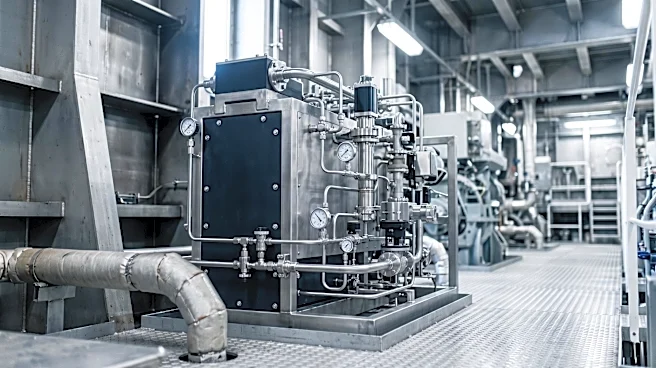
architecture that combines the electrical infrastructure of industrial facilities with their production management systems. The companies recognize that industrial operations face increasing power demands, pressure to decarbonize, and capital investment constraints, making it crucial to plan electrical systems and production operations in a coordinated manner. By combining their expertise in grid connection, power quality, energy management, protection and control, process automation, and digital operations, they seek to streamline engineering, improve cross-functional coordination, and support digital mining operations.
Why It's Important?
This collaboration is significant for the U.S. industrial sector, particularly for mining and metals, as it addresses critical challenges related to energy efficiency, sustainability, and operational modernization. The integration of power and automation systems can lead to more efficient, resilient, and sustainable industrial operations, which is vital for meeting growing demand for critical minerals while simultaneously reducing environmental impact. The partnership's focus on electrification aligns with global decarbonization efforts and could set new industry standards for energy management and operational performance. For U.S. mining companies, this means potential improvements in equipment utilization, production continuity, and operating costs, which are crucial given the estimated trillion-dollar capital expenditure needed for new capacity over the next decade. This initiative could also foster job growth in specialized fields related to industrial automation and energy management.
What's Next?
Hitachi Energy and Rockwell Automation are exploring opportunities in solution development, customer engagement, and selected industrial applications, with an initial focus on mining and metals. The long-term vision includes expanding this integrated approach to other energy-intensive industries. The companies anticipate that the combination of electrification, automation, and digital technologies will provide greater visibility across energy consumption, production performance, and asset utilization once facilities are operational. This integrated approach is also designed to offer a scalable foundation for future capacity expansion, increased electrification, and the integration of new energy resources. The success of this partnership could lead to widespread adoption of similar grid-to-process architectures, transforming how industrial facilities are designed, built, and operated.
Beyond the Headlines
This partnership highlights a broader trend in industrial sectors towards holistic, integrated solutions that address both energy and operational challenges simultaneously. The concept of a 'grid-to-process' architecture signifies a paradigm shift from siloed planning of power infrastructure and production systems to a more unified approach. This integration has profound implications for industrial resilience, as it allows for better management of power fluctuations and operational disruptions. Ethically, the focus on decarbonization and sustainability in mining, an industry often associated with significant environmental impact, represents a commitment to more responsible industrial practices. Culturally, it underscores the increasing reliance on advanced technology and digital transformation to achieve both economic and environmental goals, pushing industries to adopt more sophisticated and interconnected systems. This collaboration could also influence regulatory frameworks and industry standards for electrification and automation in heavy industries.