




What's Happening?
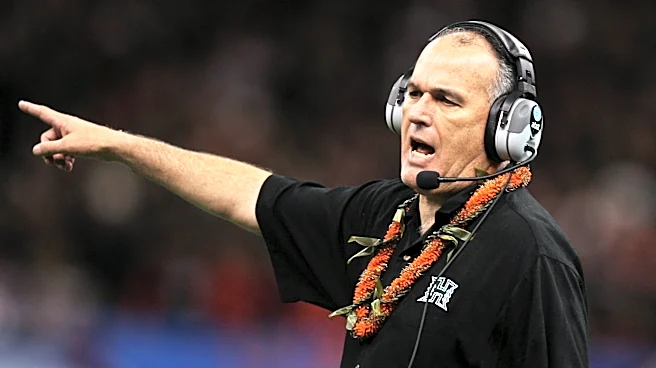
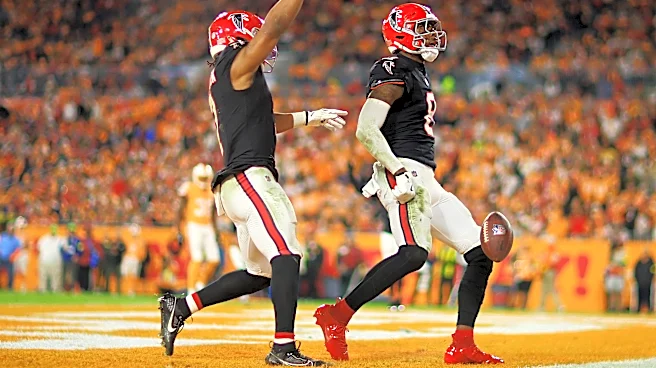
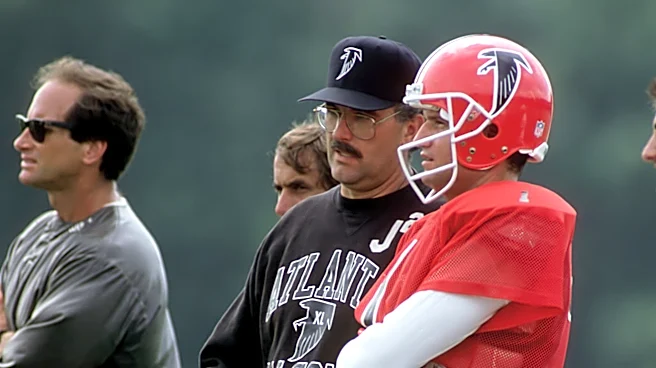
June Jones, a prominent figure in both NFL and college football coaching, passed away on Thursday at the age of 73. The Honolulu Star-Advertiser reported that Jones had entered hospice care two weeks prior to his death. Jones was widely recognized for
his early adoption and popularization of the run-and-shoot offense throughout his four-decade career. His coaching journey included stints as the head coach for the Atlanta Falcons from 1994 to 1996, and later as the head coach for the Hawaii Warriors and the SMU Mustangs. Before his coaching career, Jones played as a quarterback for the Falcons for four seasons and also spent time in the CFL.
Why It's Important?
June Jones's passing marks the end of an era for a coach who significantly influenced offensive strategies in football. His commitment to the run-and-shoot offense, which emphasized a pass-first approach with option routes for receivers, was revolutionary for its time and helped shape modern offensive playbooks. As the winningest coach at Hawaii, he led the Warriors to a 12-0 regular season in 2007, showcasing the effectiveness of his system and elevating the program to national prominence. His coaching career, spanning both professional and collegiate levels, left a lasting impact on numerous players and coaches, solidifying his legacy as an innovator in the sport.
What's Next?
The football community will continue to reflect on June Jones's contributions to the sport. Tributes from former players, colleagues, and fans are expected to highlight his innovative coaching style and his impact on their careers and the game itself. His legacy, particularly his pioneering work with the run-and-shoot offense, will likely be discussed in coaching circles and football analyses for years to come. His influence on offensive schemes can still be seen in various forms in contemporary football, ensuring his ideas continue to resonate within the sport.
Beyond the Headlines
June Jones's career extended beyond just wins and losses; he was a true innovator who challenged conventional football wisdom. His dedication to the run-and-shoot offense, often seen as unconventional, demonstrated a willingness to experiment and adapt, ultimately proving its efficacy at high levels of competition. This pioneering spirit not only brought success to his teams but also inspired a generation of coaches to think differently about offensive play. His story serves as a testament to the power of conviction and innovation in a sport often resistant to change, leaving a profound mark on how football is played and perceived.