





What's Happening?
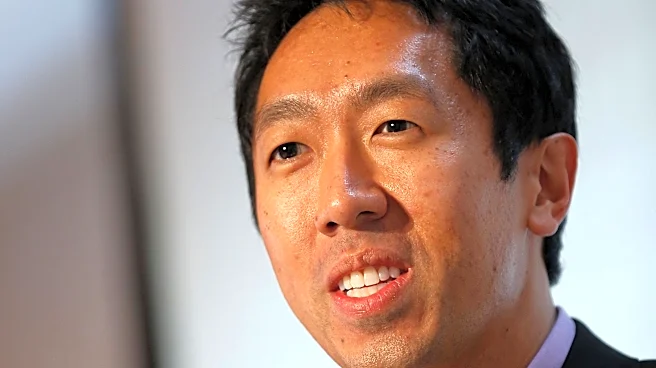
Anthony Pompliano, a prominent investor, predicts that OpenAI and Anthropic will significantly underperform investor expectations over the next three years. His analysis is based on what he calls "token math," which suggests a shift in how companies consume
AI services. Pompliano notes that while these labs were initially the go-to for AI solutions, businesses are increasingly optimizing their AI usage. He cites his own company, Silvia, which fine-tuned its models with fewer than 10 engineers for specific tasks like personal finance, as an example. This trend of companies developing their own specialized AI models internally means existing customers use fewer tokens from frontier labs over time, leading to a "retention leaking" effect. To maintain growth, OpenAI and Anthropic will need to continuously onboard new users who are not yet utilizing AI, simply to offset the declining token consumption from existing clients. He acknowledges that these labs still run good businesses and that overall AI usage is low, but emphasizes that the "easy money" for these large model labs is over.
Why It's Important?
This prediction by Anthony Pompliano carries significant weight for the U.S. technology sector and its investors, particularly those heavily invested in artificial intelligence. If his analysis proves correct, it signals a maturation of the AI market where the initial boom for large, general-purpose AI models may be tapering off. This shift could lead to a reallocation of investment from foundational AI labs like OpenAI and Anthropic towards companies that specialize in fine-tuning and implementing AI for specific business use cases. It also highlights a potential competitive advantage for businesses that develop in-house AI capabilities, allowing them to reduce costs and gain more tailored intelligence. For investors, this means a need to re-evaluate their AI portfolios, moving beyond simply investing in the largest model providers to considering companies that are effectively integrating and optimizing AI within their operations. The implications extend to the broader economy, as businesses across various sectors seek to leverage AI more efficiently and cost-effectively.
What's Next?
In the coming years, the AI landscape is likely to see increased competition and innovation in specialized AI applications. Companies that currently rely heavily on OpenAI and Anthropic's general models may begin to explore developing their own fine-tuned models or partnering with more niche AI solution providers. This could lead to a diversification of the AI market, with a greater emphasis on customized and efficient AI deployments. Investors will be closely watching the revenue growth of OpenAI and Anthropic, as well as the emergence of new players in the AI optimization space. The trend could also spur further development in open-source AI models, providing more accessible and customizable options for businesses. Ultimately, the focus will shift from simply adopting AI to strategically integrating and optimizing it for specific business outcomes, potentially leading to a more fragmented yet robust AI ecosystem.
Beyond the Headlines
Pompliano's insights delve into a deeper economic principle within the AI industry: the commoditization of foundational AI models. As AI technology becomes more accessible and easier to implement, the value may shift from the creators of the core models to those who can effectively apply and optimize them for specific, real-world problems. This mirrors historical patterns in other technology sectors, where initial innovators eventually face competition from specialized integrators and custom solution providers. The "token math" argument suggests that the current revenue models of large AI labs, based on token consumption, may not be sustainable for exponential growth as businesses become more efficient. This could lead to a re-evaluation of intellectual property in AI, with greater emphasis on proprietary data and application-specific algorithms rather than just the underlying model architecture. The ethical implications also arise as more companies develop their own AI, potentially leading to a more diverse but also more complex landscape of AI governance and responsible use.