







What's Happening?
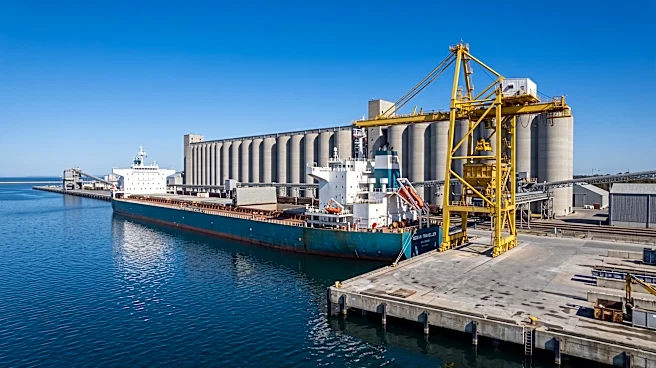
The Ukrainian feed barley market is currently experiencing downward price pressure, with FOB Odesa values declining and inland FCA quotes in Kyiv remaining stable. This situation is primarily driven by disruptions at Greater Odesa ports, which threaten
up to half of Ukraine’s agricultural export capacity, and weak domestic feed demand. As a result, more barley is being diverted to alternative export routes via rail, road, and Danube ports, leading to discounted prices. Despite these challenges, EU feed barley benchmarks in France and Germany remain comparatively higher, maintaining a significant discount for Ukrainian origin. The market is also influenced by logistics risks in the Black Sea, active farm selling post-harvest, and limited buying interest from local feed compounders. Weather conditions in key producing regions are seasonally cooler and mostly dry, which supports field work and storage but offers little price support.
Why It's Important?
The ongoing disruptions in Ukraine's barley export channels have significant implications for global agricultural markets and U.S. grain producers. The reduced export capacity from Odesa forces Ukrainian barley into alternative, more costly routes, which can increase global supply chain inefficiencies and potentially impact international grain prices. For U.S. farmers, particularly those in states like Oklahoma, this situation contributes to a highly competitive global market where U.S. export values struggle to compete with lower-priced Black Sea offerings. The aggressive export flows from Russia and Ukraine, even with logistical challenges, keep international tender values well below U.S. Gulf offers, making it difficult for U.S. wheat and barley to find international buyers. This dynamic can compress profit margins for U.S. producers and necessitate careful risk management strategies, especially given tight domestic margins and high input costs.
What's Next?
Ukrainian producers are advised to consider scaling in sales on any short-lived price upticks, particularly for FOB/Odesa positions, and to prioritize CPT and FCA deals with clearer execution over speculative FOB sales due to persistent logistics risks and soft feed demand. Exporters and traders are encouraged to maintain cautious coverage, locking in discounted Ukrainian supply against firmer EU barley when freight and insurance for Danube or overland routes are secured, while avoiding over-committing on Odesa loadings until port access and risk premiums become clearer. Domestic and EU feed buyers are recommended to adopt a patient buying strategy but be prepared to extend coverage if geopolitical tensions ease or if competing feed grains strengthen, as the current Ukrainian discount justifies opportunistic spot purchasing. The market's future direction will largely depend on developments regarding export corridors and demand signals, rather than immediate weather patterns.
Beyond the Headlines
The situation in the Ukrainian barley market underscores the broader geopolitical impact on global food security and trade. The reliance on alternative export routes, while necessary, highlights the vulnerability of agricultural supply chains to regional conflicts and infrastructure limitations. This shift also brings into focus the economic strain on Ukrainian farmers, who face increased logistics costs and reduced profitability, potentially influencing future planting decisions and long-term agricultural output. For the U.S., the uncompetitive nature of its grain exports in this environment could prompt a reevaluation of trade policies and support mechanisms for domestic producers. The ongoing challenges in the Black Sea region also emphasize the need for diversified global food sources and resilient trade routes to mitigate the effects of such disruptions on international markets and consumer prices.