




What's Happening?
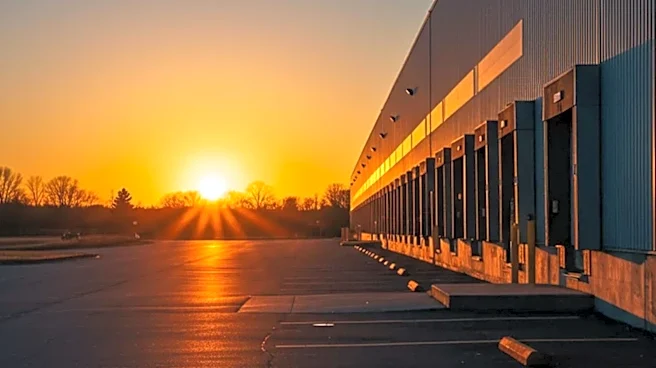
ARTO, a Southern California-based manufacturer of handcrafted tile, brick, and stone surfaces, has acquired the former Sam Levitz warehouse in Tucson, Arizona, for $8.6 million. The 129,394 square-foot property, located at 3430 E. 36th St., was purchased
on June 12. Stephen Cohen and Paul Hooker, Principals and Industrial Specialists at Cushman & Wakefield | PICOR, represented the seller in the transaction. This acquisition marks a significant expansion of ARTO's manufacturing operations into the Tucson market. The building's existing layout, which includes warehouse, distribution, showroom, and manufacturing sections, is well-suited for ARTO's needs. The deal was also facilitated by a new federal incentive under the One Big Beautiful Bill Act, allowing manufacturers to fully expense the qualifying 'shell' portion of a building used for production in the first year.
Why It's Important?
This acquisition is important for several reasons. For ARTO, it represents a strategic expansion that will increase its manufacturing capacity and market reach across the United States and internationally. The move into Tucson signifies a commitment to growth and the potential creation of new jobs in the region. For the Tucson economy, the repurposing of a large commercial property like the former Sam Levitz warehouse is a positive development, transforming a vacant space into an active manufacturing facility. The closure of Sam Levitz after 70 years highlighted the challenges faced by traditional large-format retailers due to the shift to online retail and big-box chains. ARTO's investment in a physical manufacturing presence counters this trend, demonstrating the continued viability of brick-and-mortar production. The federal incentive also underscores government efforts to stimulate domestic manufacturing, potentially encouraging similar investments by other companies.
What's Next?
ARTO will proceed with adapting the former Sam Levitz warehouse to its manufacturing specifications, which will involve setting up production lines for its handcrafted tile, brick, and stone surfaces. This process will likely include hiring local staff for manufacturing, distribution, and administrative roles, contributing to job growth in Tucson. The company plans to leverage the building's existing infrastructure for its diverse product lines, including concrete tile, ceramic tile, and glazed brick veneer. The long-term success of this expansion will depend on ARTO's ability to integrate its established craftsmanship with the new facility's capabilities and to effectively serve its growing customer base of architects, designers, distributors, and dealers. The federal incentive that aided this acquisition may also serve as a model for future manufacturing investments across the U.S.
Beyond the Headlines
The acquisition of the Sam Levitz warehouse by ARTO reflects a broader economic narrative of adaptation and resilience in the face of changing retail landscapes. While traditional furniture showrooms struggle against e-commerce giants, specialized manufacturers like ARTO are finding new opportunities for growth by investing in physical production facilities. This move highlights the enduring value of craftsmanship and quality in a market often dominated by mass-produced goods. The story also subtly touches upon the importance of local economic development, as a family-owned business expands its footprint and brings its heritage of artistry to a new community. The federal incentive's role in making the deal financially viable points to a policy environment that increasingly recognizes the strategic importance of domestic manufacturing and job creation, potentially influencing future legislative efforts to support industrial growth.