





What's Happening?
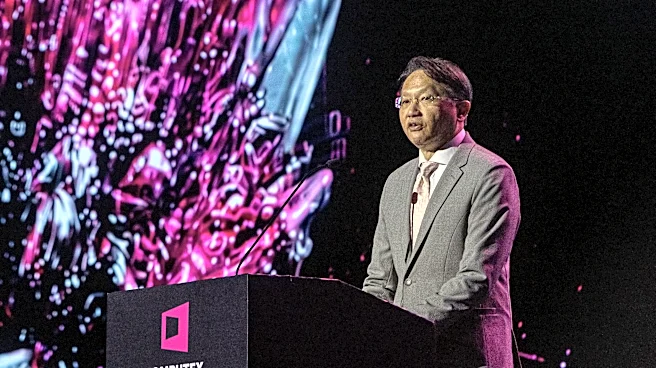
Bryan Catanzaro, Nvidia's head of applied deep learning research, is a prominent advocate for an open AI ecosystem, emphasizing its commercial benefits for Nvidia and its role in fostering innovation. Catanzaro leads the team behind Nemotron, Nvidia’s
open AI models, and has publicly stated that a thriving open AI ecosystem drives demand for Nvidia's hardware and software. He has argued for 'pluralism and openness' in the AI industry, expressing concerns that AI control by a small group could limit the exchange of ideas. This stance comes as American businesses increasingly seek cheaper, customizable AI solutions, often turning to open-weight models. However, a significant portion of these high-performing open-weight models originate from China, raising cybersecurity and dependency concerns among some U.S. policymakers. Recent reports from House committees have called for excluding Chinese-developed open-weight AI models from federal systems and critical infrastructure, while also acknowledging the appeal of these models due to their cost-effectiveness and performance compared to available U.S. alternatives.
Why It's Important?
The debate surrounding open-weight AI models and their origins has significant implications for U.S. industry, national security, and technological sovereignty. American businesses are increasingly adopting open-weight AI models for their cost-efficiency and customization capabilities, with usage on platforms like Databricks showing a substantial increase. However, the prevalence of high-performing Chinese open-weight models, such as those from DeepSeek and Alibaba, presents a dilemma. While these models offer economic advantages, they also raise concerns about potential cybersecurity vulnerabilities, data privacy, and the U.S.'s reliance on foreign technology. Nvidia's advocacy for an open ecosystem, championed by Catanzaro, aligns with its business strategy to expand the market for its AI hardware. The push for a national American open-weight AI initiative, as recommended by congressional reports, highlights a growing recognition of the need for competitive domestic alternatives to mitigate these risks and ensure U.S. leadership in AI development.
What's Next?
The ongoing tension between the economic benefits of open-weight AI and national security concerns is likely to shape future U.S. policy and industry direction. Following congressional recommendations, there may be increased pressure for the U.S. government to invest in and promote a national American open-weight AI initiative. This could lead to greater funding and support for U.S. companies and research institutions developing competitive open-weight models. American businesses, currently benefiting from the affordability and flexibility of Chinese models, may face restrictions on their use, potentially driving them towards proprietary U.S. offerings or nascent American open-weight alternatives. This shift could impact their operational costs and technological choices. Furthermore, the debate will likely intensify regarding the balance between fostering an open AI ecosystem, as advocated by Nvidia, and implementing safeguards to protect national interests and data security.
Beyond the Headlines
The discussion around open-weight AI models extends beyond immediate economic and security concerns, touching upon fundamental questions of technological control and democratic principles. As AI becomes more integral to various sectors, the ability to access, customize, and build upon AI models without proprietary restrictions is seen by some as crucial for innovation and preventing a monopolization of AI capabilities. Catanzaro's argument for 'pluralism' underscores the belief that broad access to AI development tools fosters diverse ideas and prevents a single entity from dictating the future of AI. Conversely, the national security perspective highlights the ethical and geopolitical implications of allowing potentially adversarial nations to influence critical technological infrastructure through widely adopted AI models. This situation could lead to a bifurcation of the global AI ecosystem, with distinct U.S.-aligned and China-aligned open-weight model landscapes, impacting international collaboration and the universal development of AI.