



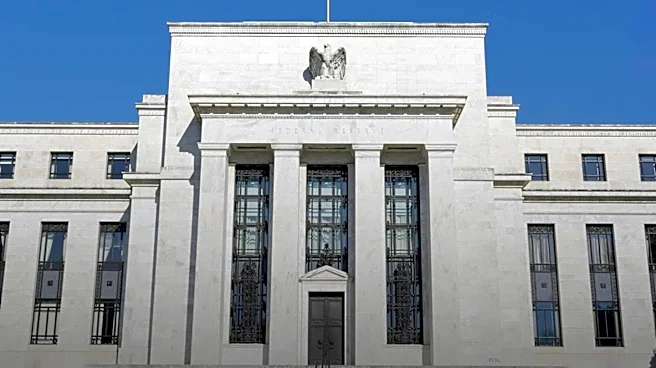
What's Happening?
Mortgage rates have experienced a slight dip this week, offering some relief to prospective homebuyers as the Thanksgiving holiday approaches. According to Freddie Mac, the average rate on 30-year fixed home loans decreased to 7.21% for the week ending
November 25, down 7 basis points from 7.28% the previous week. This modest decline comes amidst volatility in financial markets, partly attributed to AI investment trade, and a fall in Treasury yields below 5%. Despite this temporary reprieve, the Federal Reserve is widely expected to raise its benchmark rate at the upcoming Federal Open Market Committee (FOMC) meeting on December 8, in an effort to curb inflation. This looming rate hike, coupled with ongoing geopolitical tensions, has pushed the 10-year Treasury yield back towards 4.816%, indicating a potential upward trajectory for mortgage rates in the near future. Markets are currently pricing in a 97.6% chance of a 25-basis-point increase next month.
Why It's Important?
The slight decrease in mortgage rates offers a brief window of opportunity for U.S. homebuyers, potentially making homeownership marginally more accessible before an anticipated rate hike. However, the broader trend of high interest rates continues to significantly impact the housing market. Elevated mortgage rates have contributed to a record low in pending home sales in October and the lowest existing-home sales since 2010, as affordability remains a major constraint for buyers. While current market conditions present advantages for active buyers, such as less competition and increased seller willingness to negotiate, the overall affordability challenge persists. The Federal Reserve's actions to combat inflation directly influence mortgage rates, affecting the purchasing power of millions of Americans and the overall health of the real estate sector. The interplay between AI investment trade, Treasury yields, and Fed policy creates a complex economic environment for housing.
What's Next?
The Federal Reserve's anticipated rate hike on December 8 is expected to put renewed upward pressure on mortgage rates, potentially negating the recent dip. This could further dampen buyer enthusiasm and continue to suppress home sales. The housing market will likely remain sensitive to inflation data and the Fed's monetary policy decisions throughout the coming months. For prospective homebuyers, the current period might represent a fleeting opportunity to secure a slightly lower rate before further increases. Industry experts suggest that until inflation significantly cools, affordability will remain the primary challenge in the housing market. Stakeholders, including real estate agents, lenders, and construction companies, will be closely monitoring the Fed's actions and economic indicators to adjust their strategies accordingly.
Beyond the Headlines
The current dynamics in the U.S. housing market, characterized by fluctuating mortgage rates and the influence of AI investment trade, highlight a broader economic shift. The significant valuation of AI companies, such as Anthropic, which now exceeds the value of all homes currently listed for sale, indicates a reallocation of capital and investor focus. This shift could have long-term implications for traditional asset classes like real estate. The increasing role of AI-generated wealth, particularly in tech hubs, is already influencing consumer housing behavior, with some buyers opting for higher down payments. This suggests a growing disparity in purchasing power and could exacerbate existing inequalities in the housing market. The ongoing challenge of affordability, even with minor rate adjustments, points to systemic issues that extend beyond interest rates, including supply shortages and evolving investment trends.