


What's Happening?
EST-Floattech has secured a contract with Dutch system integrator Van Tiem Elektro to provide its Octopus High Energy battery systems for a new series of 15 river cruise vessels. These vessels are currently being outfitted at De Gerlien van Tiem in Druten
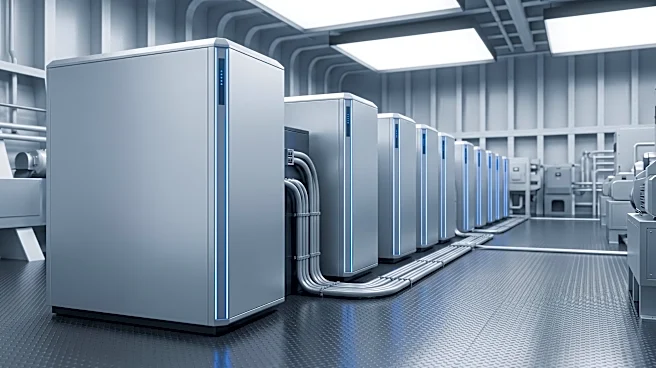
and Vahali Shipyards in Ghent, destined for various cruise operators, including AmaWaterways and Uniworld, for routes on the Danube and Black Sea region. Each vessel will be equipped with 650 kWh of battery capacity, totaling 9.7 MWh for the entire order, marking one of EST-Floattech's largest river cruise contracts to date. The Octopus HE systems are designed to support partial electric sailing, hotel load, and emergency backup power, integrating EST-Floattech's proprietary cell and module technology with a String Controller for MODbus integration into existing vessel systems. The systems hold Type Approval from DNV, Bureau Veritas, Lloyd's Register, ABS, and RINA, with final deliveries scheduled through 2030.
Why It's Important?
This contract signifies a significant step forward in the electrification of the maritime industry, particularly within the river cruise sector. The large-scale deployment of battery systems for 15 vessels underscores a growing commitment to sustainable and environmentally friendly operations in inland waterways. For the U.S. and global maritime industry, this trend indicates a shift towards reducing reliance on fossil fuels, which could lead to lower emissions and improved air quality in port cities and along river routes. The adoption of such technology by prominent cruise operators like AmaWaterways and Uniworld could set a precedent for other companies, accelerating the transition to hybrid and electric propulsion systems in commercial vessels. This also highlights the increasing demand for specialized marine battery technology, benefiting companies like EST-Floattech and their partners in the supply chain.
What's Next?
The ongoing outfitting of these 15 river cruise vessels, with final deliveries expected by 2030, will demonstrate the practical application and long-term viability of high-energy battery systems in commercial maritime operations. Success in this project could lead to further contracts for EST-Floattech and similar technology providers, expanding the market for marine electrification. We can anticipate increased investment in research and development for more efficient and powerful battery technologies tailored for maritime use. Regulatory bodies may also be influenced by such large-scale adoptions, potentially leading to new standards or incentives for electric and hybrid vessels. The experience gained from these vessels will likely inform future designs and operational strategies for sustainable river cruising and other segments of the maritime industry.
Beyond the Headlines
The electrification of river cruise vessels has broader implications for tourism and environmental conservation. By reducing noise pollution and emissions, these vessels can enhance the passenger experience and minimize their ecological footprint on sensitive river ecosystems. This aligns with a growing consumer demand for sustainable travel options, potentially boosting the appeal of river cruises. Furthermore, the development and deployment of advanced battery systems contribute to the overall energy transition, showcasing how different sectors can adopt green technologies. The collaboration between technology providers, system integrators, and cruise operators highlights the complex partnerships required to drive such large-scale environmental initiatives, fostering a more interconnected and sustainable maritime ecosystem. This also sets a precedent for other transportation sectors to explore similar electrification strategies.