








What's Happening?
Two new studies from Cornell University indicate that solar grazing, the practice of using sheep to manage vegetation around solar panels, offers significant environmental and economic advantages. One study, conducted at a New York community solar farm
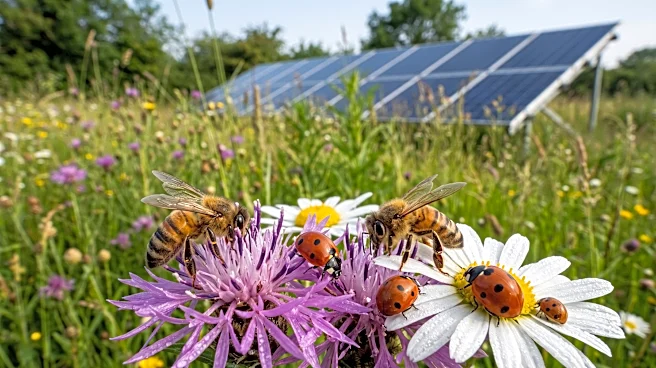
over three years, compared the effects of different sheep stocking rates on beneficial insect populations. It found that a low grazing rate of two sheep per hectare increased beneficial insects by 38% compared to mowing, with wild bees, honey bees, and lady beetles showing significant increases, and honey bee numbers rising by 83%. Higher stocking rates (four and eight sheep per hectare) improved vegetation control but had varying impacts on insect populations, with honey bee numbers declining at the highest rate. The research emphasizes the need to balance vegetation management with ecological benefits. A second Cornell study developed a decision-support tool to help sheep farmers manage and expand their operations, considering factors like flock size, costs, revenue, and vegetation growth at solar sites. This tool also assists solar developers in structuring more sustainable agreements with farmers.
Why It's Important?
Solar grazing presents a dual benefit for both renewable energy development and the agricultural sector. Environmentally, it offers a sustainable alternative to mechanical mowing for vegetation control at solar sites, which can reduce carbon emissions and noise pollution. More importantly, low-density grazing can enhance biodiversity by creating habitats for beneficial insects like pollinators, which are crucial for agricultural ecosystems beyond the solar farms. Economically, solar grazing provides a reliable new income stream for sheep farmers, who are compensated for vegetation management services rather than paying for pasture access. This additional revenue can support farm expansion, equipment purchases, and job creation, addressing the growing demand for lamb and wool in the U.S. The decision-support tool developed by Cornell helps farmers and solar companies optimize these arrangements, fostering a more symbiotic relationship between energy production and livestock agriculture. This integration demonstrates how renewable energy projects can contribute positively to local economies and ecological health.
What's Next?
The Cornell studies suggest that solar grazing is poised for further growth as renewable energy development continues across rural areas. The findings will likely inform best practices for managing solar sites, encouraging the adoption of low-density grazing to maximize ecological benefits while maintaining effective vegetation control. The decision-support tool is expected to improve the profitability and sustainability of solar grazing operations for both farmers and solar developers, leading to more widespread and mutually beneficial agreements. Future research may focus on refining stocking rate recommendations for different regions and ecosystems, as well as exploring the long-term impacts of solar grazing on soil health and overall biodiversity. As the U.S. sheep industry seeks to expand, solar grazing contracts could become a significant factor in its growth, providing stable income and access to grazing land. This innovative practice is likely to evolve with continued research and collaboration between the energy and agricultural sectors.
Beyond the Headlines
Solar grazing represents a fascinating example of 'agrivoltaics,' where agriculture and solar energy production coexist and create synergistic benefits. This approach challenges the traditional view of land use, demonstrating that renewable energy infrastructure doesn't necessarily have to displace agricultural activities but can, in fact, enhance them. The ethical implications revolve around responsible land stewardship and the potential for creating multi-functional landscapes that serve both energy needs and ecological conservation. Culturally, it signifies a shift towards more integrated and sustainable land management practices, moving away from monoculture and single-purpose land use. Legally, the development of clear contractual frameworks between solar developers and farmers will be crucial to ensure fair compensation and long-term viability of these partnerships. This innovative practice could trigger broader discussions about how to maximize the utility and ecological value of land in the face of climate change and increasing demands for both food and energy, fostering a more resilient and interconnected rural economy.