





What's Happening?
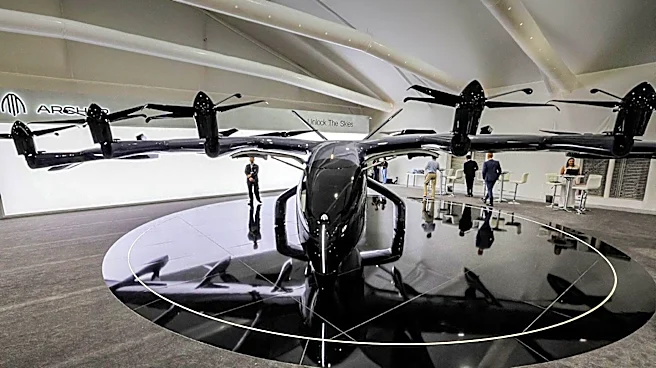
Investors are weighing the potential of Archer Aviation, a pioneer in urban air mobility, against Ford Motor, a legacy automaker transitioning to electric vehicles. Archer Aviation is developing electric vertical takeoff and landing (eVTOL) aircraft,
including the Midnight air taxi, and has secured a $1 billion purchase agreement with United Airlines. Despite its innovative approach, Archer reported a net loss of $618.2 million in FY 2025. Meanwhile, Ford is executing its Ford+ plan to expand its electric and hybrid vehicle offerings. In FY 2025, Ford reported revenue of nearly $174 billion but faced a net loss of $8.2 billion due to production costs and strategic shifts.
Why It's Important?
The comparison between Archer Aviation and Ford Motor highlights the broader industry trends of innovation versus stability. Archer represents the disruptive potential of new technology in urban air mobility, which could revolutionize transportation. However, its success depends on regulatory approvals and market adoption. Ford, on the other hand, is leveraging its established market presence to transition into the growing electric vehicle sector. This shift is crucial for maintaining competitiveness in an industry increasingly focused on sustainability. Investors must consider the risks and rewards of investing in a high-growth startup like Archer versus a stable, albeit evolving, company like Ford.
Beyond the Headlines
The investment decision between Archer and Ford reflects a larger narrative about the future of transportation. Archer's focus on eVTOL technology could lead to significant changes in urban mobility, reducing congestion and emissions. However, the path to commercialization is fraught with regulatory and technical challenges. Ford's transition to electric vehicles is part of a global shift towards sustainable transportation, driven by consumer demand and regulatory pressures. This evolution requires substantial investment in new technologies and infrastructure. Both companies face unique challenges and opportunities, and their success will depend on their ability to adapt to changing market dynamics.