



What's Happening?
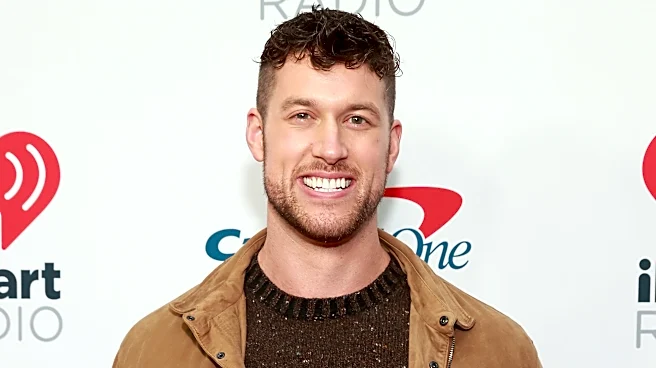
Peacock has announced a new four-part documentary titled "Love Trapped: The Case of Laura Owens," set to premiere in 2027. The documentary will delve into the years-long legal battle involving former 'Bachelor' lead Clayton Echard and Laura Owens, who
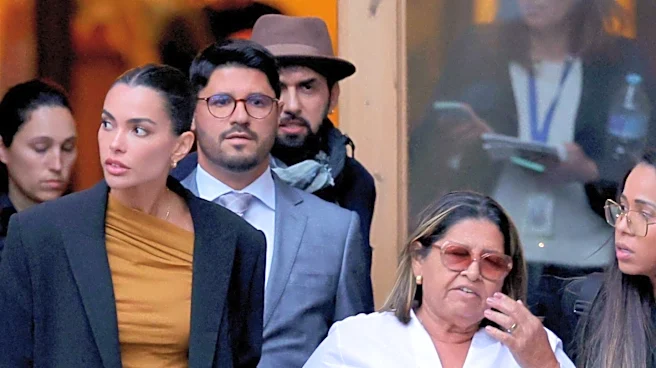
falsely claimed to be pregnant with his twins. The series will feature exclusive interviews with Echard, his legal team, and other men allegedly targeted by Owens. Notably, Owens, who pleaded guilty in August to multiple charges including fraudulent schemes and identity theft, will also share her perspective for the first time. In October, Owens was sentenced to 30 days in jail and seven years of probation for her crimes. The documentary's logline describes the story as a private dispute that escalated into a nationally followed media firestorm, fueled by citizen sleuths and social commentators, ultimately revealing a shocking trail of deception and public humiliation.
Why It's Important?
This documentary highlights the increasing public and media scrutiny surrounding high-profile personal disputes, especially those involving reality television personalities. The case of Laura Owens and Clayton Echard underscores the severe consequences of fraudulent schemes and identity theft, demonstrating how such actions can lead to significant legal repercussions and public exposure. For Echard, the documentary offers a platform to share his experience and potentially bring closure to a traumatic period, while for Owens, it marks her first public account of the events, potentially offering insights into her motivations. The narrative also touches upon broader societal questions regarding the desire for love turning into obsession, and the role of media and online communities in shaping public perception during such events.
What's Next?
The documentary "Love Trapped: The Case of Laura Owens" is scheduled to premiere in 2027 on Peacock. Its release is expected to reignite public discussion around the case, potentially drawing renewed attention to the legal and ethical implications of such deceptive practices. The inclusion of interviews with both Echard and Owens suggests a comprehensive look at the events from multiple viewpoints, which could lead to further public debate and analysis. The documentary may also serve as a cautionary tale regarding online interactions and the potential for manipulation, especially in the context of personal relationships that gain public traction.
Beyond the Headlines
The case explored in the documentary raises significant questions about the intersection of personal relationships, public figures, and the legal system. It delves into the psychological aspects of deception and obsession, examining how a desire for connection can manifest in harmful ways. The involvement of 'citizen sleuths' and social commentators in the unfolding drama also highlights the evolving role of digital communities in shaping narratives and influencing public opinion, sometimes preceding or even impacting formal legal proceedings. Furthermore, the documentary could spark conversations about accountability, victimhood, and the long-term impact of public humiliation on individuals involved in such high-stakes personal dramas, offering a deeper look into the human element behind sensational headlines.