



What's Happening?
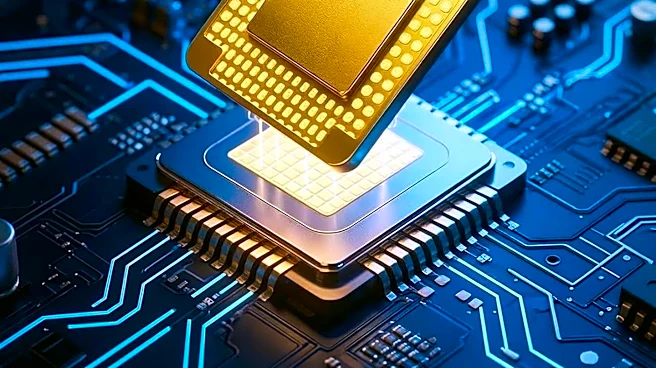
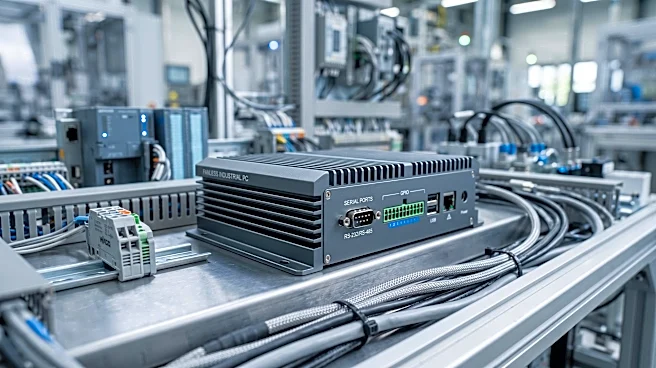
Texas Instruments (TI) has introduced two new industrial communication products aimed at enhancing interoperability in factory automation, robotics, and Industrial Internet of Things (IIoT) devices. The new offerings include the TICS100MOD multiprotocol
communications system-on-module (SoM) and the TIOM2212 dual-channel IO-Link master. The TICS100MOD is designed to support multiple Industrial Ethernet protocols such as EtherCAT, EtherNet/IP, and Profinet on a single hardware platform, allowing engineers to switch between protocols via firmware updates without hardware changes. This module is based on TI’s AM2612 microcontroller and DP83826AI Ethernet physical layer, integrating two Arm Cortex-R5F cores and external memory. The TIOM2212, on the other hand, is a dual-channel IO-Link master that connects industrial sensors and actuators to higher-level factory control systems, facilitating data exchange across different automation infrastructure levels. It features integrated analog functions, protection features, and a frame handler, and is compatible with TI’s Sitara industrial networking system-on-chip family and AM13Ex real-time microcontrollers. These products are part of TI's broader strategy to provide comprehensive hardware and software solutions for industrial networking applications, addressing the evolving communication requirements in manufacturing.
Why It's Important?
These new products from Texas Instruments are significant for the U.S. industrial sector as they address critical challenges in factory automation and the adoption of Industry 4.0 technologies. The ability of the TICS100MOD to support multiple Industrial Ethernet protocols on a single platform can substantially reduce development costs and complexity for manufacturers. This flexibility means companies no longer need to design separate hardware for different communication standards, streamlining product development and accelerating time-to-market for industrial equipment. The TIOM2212’s role in bridging sensors and actuators with higher-level control systems is crucial for creating more integrated and efficient smart factories. By simplifying the connection of field devices to industrial control networks, TI is enabling greater data flow and real-time decision-making, which can lead to improved operational efficiency, reduced downtime, and enhanced productivity across various U.S. manufacturing industries. Companies like SICK are already leveraging TI's solutions, indicating a positive impact on the development of robust and future-ready communication technologies in industrial automation.
What's Next?
Texas Instruments plans to demonstrate the TICS100MOD and related industrial communication technologies at electronica 2026 in Munich, Germany, from November 10–13. These demonstrations will showcase multiprotocol Industrial Ethernet integration, IO-Link, time-sensitive networking, and integrated neural processing units. Following these demonstrations, it is expected that industrial equipment manufacturers and automation solution providers will begin integrating these new TI components into their next-generation products. The market can anticipate a gradual adoption of these flexible communication modules and IO-Link masters, leading to more standardized and interoperable industrial systems. Further developments may include expanded software support, additional protocol integrations, and partnerships with other industrial technology providers to create more comprehensive automation ecosystems. The focus will likely be on how these technologies can further enable the seamless integration of diverse factory equipment and IIoT devices, driving efficiency and innovation in industrial settings.
Beyond the Headlines
The introduction of these multiprotocol and IO-Link solutions by Texas Instruments signals a broader shift towards greater standardization and interoperability in industrial automation. Historically, the industrial sector has been characterized by a fragmented landscape of proprietary communication protocols, leading to significant integration challenges and vendor lock-in. TI's approach, which combines programmable hardware with certified software stacks, aims to break down these silos, fostering a more open and flexible industrial ecosystem. This could lead to increased competition among hardware providers, as the barrier to entry for developing compatible industrial equipment is lowered. Furthermore, the emphasis on reducing hardware complexity and enabling software-defined protocol switching aligns with the broader trend of software-defined everything, which is transforming various technology sectors. This development could also accelerate the adoption of advanced manufacturing techniques, such as predictive maintenance and real-time process optimization, by making it easier to collect and analyze data from diverse industrial assets. Ultimately, it could drive a more agile and resilient manufacturing base in the U.S.