







What's Happening?
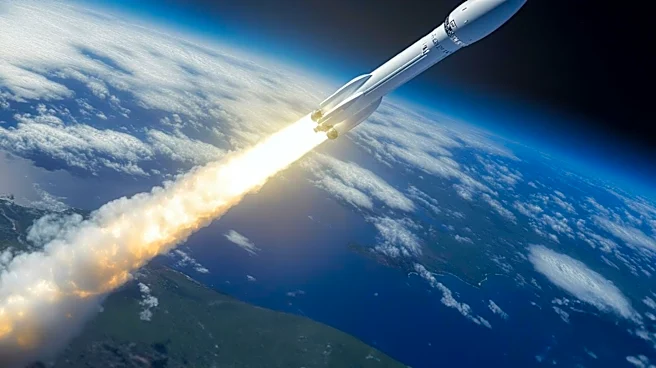
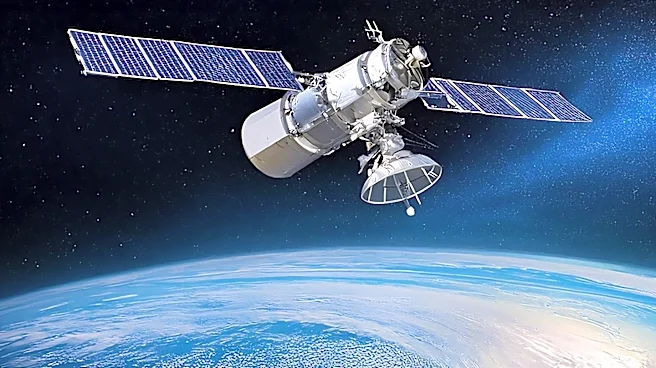
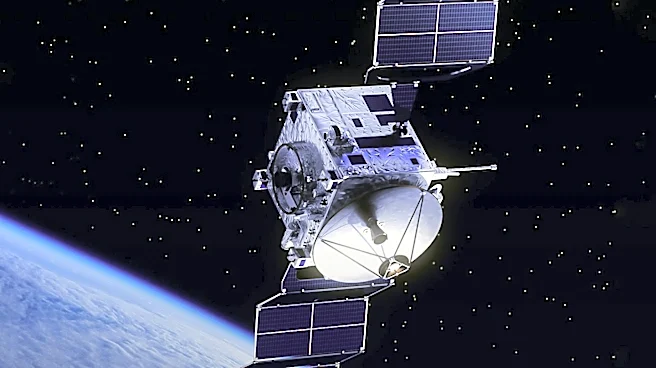
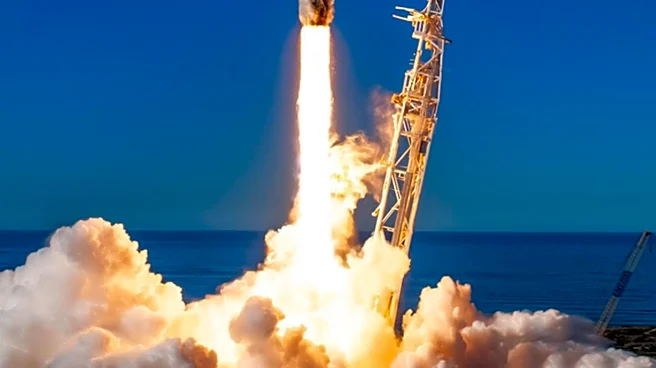
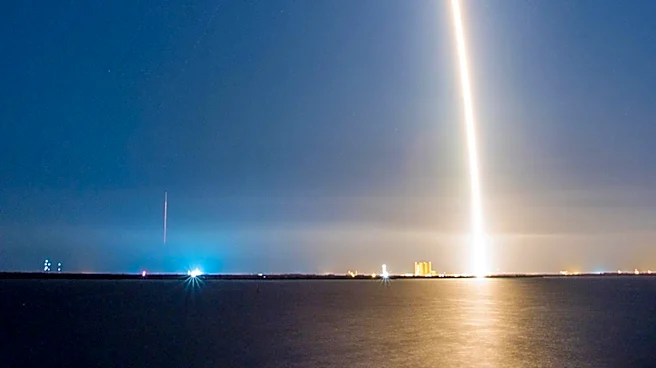
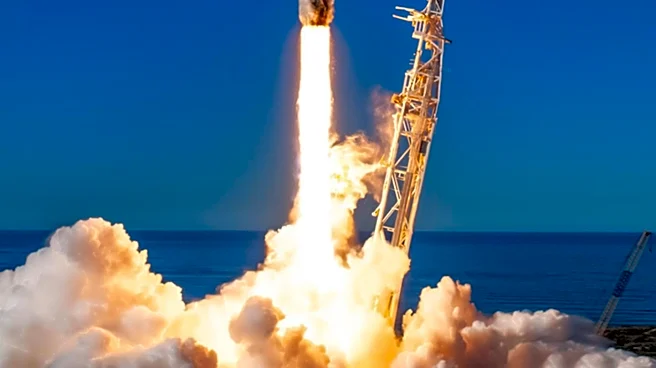
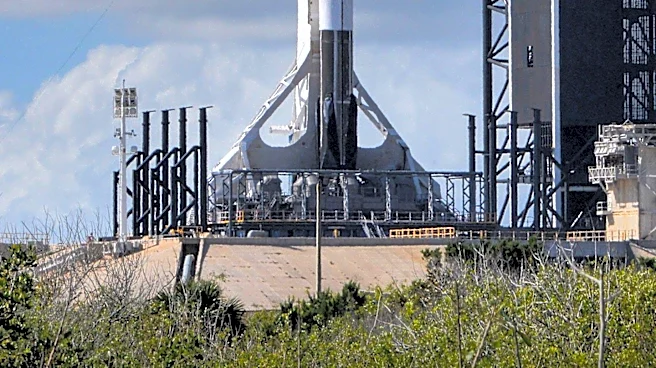
On July 2, 2026, an Atlas V rocket successfully launched 29 Amazon Leo satellites into orbit from Cape Canaveral. This marks the final use of the Atlas V for Amazon's satellite launches, as the company transitions to newer launch vehicles. The Amazon Leo project,
previously known as Project Kuiper, aims to provide global broadband internet access and is a direct competitor to SpaceX's Starlink. With this launch, the number of Amazon Leo satellites in orbit now exceeds 390. Future launches will utilize Vulcan Centaur rockets, European Ariane 6 rockets, and even SpaceX's Falcon 9 rockets.
Why It's Important?
The successful deployment of Amazon Leo satellites is a significant step in the competition for global satellite internet services. As Amazon continues to build its satellite constellation, it challenges SpaceX's dominance in the market. The transition to newer launch vehicles like the Vulcan Centaur is crucial for Amazon's long-term strategy, especially after the Atlas V's production was discontinued. This shift also highlights the evolving landscape of the aerospace industry, where companies are increasingly relying on advanced technology to enhance their capabilities and reduce costs.
What's Next?
Amazon will continue to expand its satellite constellation using the Vulcan Centaur and other rockets. The company aims to increase the number of satellites in orbit to improve internet coverage and service quality. However, the Vulcan Centaur's recent accident during a military mission raises concerns about its reliability. Amazon will need to address these issues to ensure the success of future launches. Additionally, the competition with SpaceX is expected to intensify as both companies strive to capture a larger share of the satellite internet market.
Beyond the Headlines
The transition from Atlas V to newer rockets signifies a broader trend in the aerospace industry towards more efficient and cost-effective launch solutions. This shift is driven by the need to support the growing demand for satellite internet services and the increasing number of satellite constellations. The competition between Amazon and SpaceX also raises questions about the regulatory and environmental implications of deploying large numbers of satellites in low Earth orbit. As these constellations expand, concerns about space debris and the impact on astronomical observations are likely to grow.