






What's Happening?
The International Finance Corporation (IFC), a member of the World Bank Group, is providing up to EUR 52 million to support Marquardt Group's investment program in Tunisia. This financing aims to expand Marquardt's automotive manufacturing operations
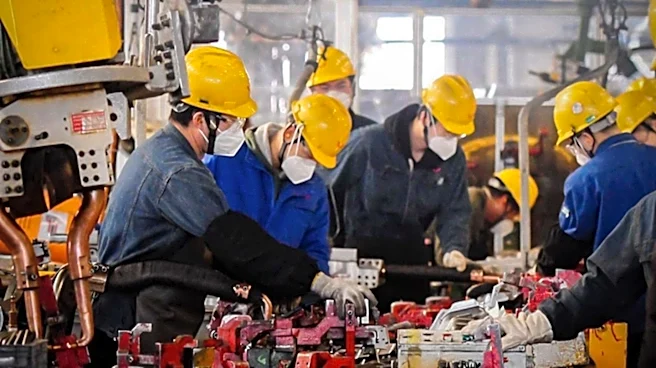
across three facilities in the greater Tunis area. The project is expected to create over 400 jobs in Tunisia, focusing on higher-value production of advanced automotive mechatronic components and strengthening the country's role in the global automotive value chain. The investment will also support working capital needs as the company grows and includes provisions for greener manufacturing through solar photovoltaic installations and energy-efficiency measures. Marquardt, a German-headquartered global supplier of mechatronic systems, has operated in Tunisia since 1991.
Why It's Important?
This partnership is significant for Tunisia's economic development, particularly in the automotive components industry, which already employs an estimated 90,000 people and contributed approximately TND 10 billion to exports in 2025. By expanding higher-value manufacturing, Tunisia can enhance its industrial base, integrate more deeply into global value chains, and create more economic opportunities. The project aligns with the World Bank Group's strategy of job creation, identifying value-added manufacturing as a sector with strong potential. Furthermore, the initiative aims to expand opportunities for women, who constitute about 65% of Marquardt's workforce in Tunisia, by advising the company on strengthening pathways into managerial and technical positions. This investment underscores the IFC's commitment to private sector-led growth and job creation in the region.
What's Next?
Marquardt Group will proceed with its investment program, expanding production of advanced automotive mechatronic components and increasing its workforce in Tunisia. The IFC will continue its engagement, building on its existing presence and supporting Marquardt's ongoing investment in the country. The project's success could serve as a model for further private sector investment in Tunisia's manufacturing sector, potentially attracting more foreign direct investment and fostering deeper integration into global supply chains. The focus on greener manufacturing practices also sets a precedent for sustainable industrial development in the region.
Beyond the Headlines
This initiative highlights a broader strategy by the World Bank Group to foster economic growth and job creation in developing countries through private sector engagement. By focusing on value-added manufacturing and integrating local economies into global supply chains, the IFC aims to create sustainable economic opportunities. The emphasis on empowering women in the workforce and promoting green manufacturing practices reflects a holistic approach to development that considers social and environmental impacts alongside economic gains. This model could influence future development projects, encouraging a blend of economic growth, social equity, and environmental sustainability in emerging markets.