






What's Happening?
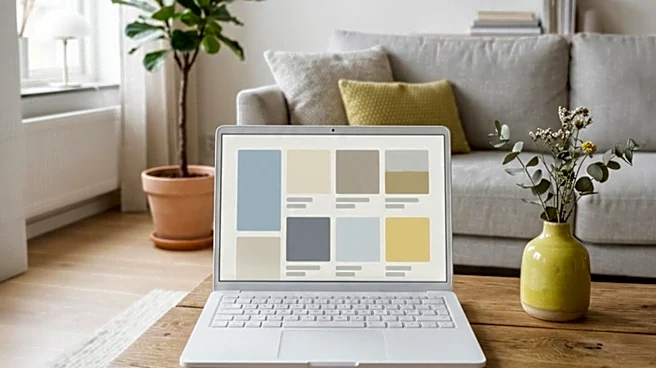
AI Room Makeover is a photo-based artificial intelligence interior design tool designed for homeowners, renters, and designers. Users can upload a photograph of an existing space and describe their desired outcome, allowing the AI to generate design concepts.
The tool facilitates exploration of full-room makeovers or specific changes to furniture, wall colors, curtains, cabinetry, and materials. Users can also provide optional reference images to guide the visual direction of the design. These generated concepts serve as visual previews, aiding in discussions with family members, contractors, or interior designers, and helping to narrow down ideas before making physical purchases or planning work. The tool offers one-time credit purchases instead of a subscription model, with trial availability varying.
Why It's Important?
This AI tool is important because it democratizes access to professional-grade interior design visualization, potentially saving consumers significant time and money. By allowing users to preview design changes before committing to them, it reduces the risk of costly mistakes in home renovation or redecoration projects. For individuals, it provides a low-barrier entry point to experiment with various styles and layouts, fostering creativity and informed decision-making. For professionals, it can streamline the initial client consultation phase by quickly generating multiple design options based on client input. The ability to compare different visual concepts can lead to more efficient project planning and a higher likelihood of client satisfaction, ultimately impacting the home improvement and interior design industries by making them more accessible and less financially risky for the average consumer.
What's Next?
The continued development and adoption of AI interior design tools like AI Room Makeover are likely to influence how home renovation and decorating projects are approached. As these tools become more sophisticated, they may integrate with e-commerce platforms, allowing users to directly purchase items featured in their AI-generated designs. This could create new revenue streams for retailers and design firms. Furthermore, the increasing accuracy and realism of AI-generated visuals could lead to a greater reliance on virtual staging for real estate, impacting how properties are marketed and sold. The competitive landscape among AI design tools is also expected to evolve, with continuous innovation in features, user experience, and pricing models to attract a broader user base.
Beyond the Headlines
The rise of AI interior design tools raises interesting questions about the future of human creativity and professional design services. While these tools offer convenience and accessibility, they also prompt discussions about the value of human intuition and expertise in design. There's a potential for these tools to become indispensable assistants, augmenting human designers' capabilities rather than replacing them, by handling repetitive tasks and generating initial concepts. However, it also highlights a shift in consumer expectations, where instant visual gratification and personalized digital experiences are becoming the norm. This could lead to a redefinition of the designer's role, focusing more on curation, customization, and the emotional connection of a space, rather than just technical execution. The ethical implications of AI-generated aesthetics and the potential for design homogenization also warrant consideration.