






What's Happening?
Disneyland in California provides a distinct visitor experience compared to Disney World in Florida, despite being significantly smaller in acreage. While Disney World spans 25,000 to 27,000 acres with four theme parks and two water parks, Disneyland consists
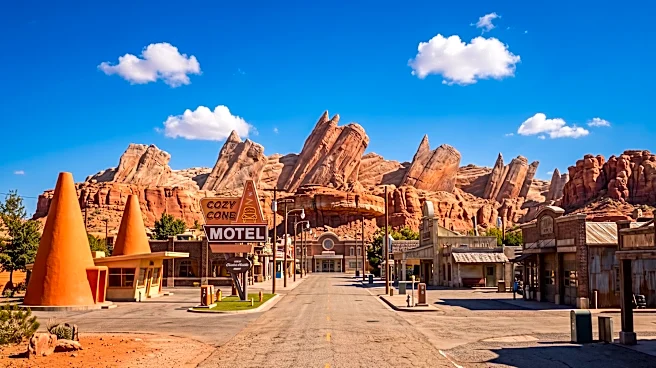
of just two parks—Disneyland and California Adventure—on 500 acres. A key differentiator is the walkability between Disneyland and California Adventure, allowing guests to easily move between parks without needing additional transportation, unlike Disney World. Disneyland also features unique attractions not found at its larger counterpart, such as the Incredicoaster ride based on 'The Incredibles' and an entire area in California Adventure dedicated to the 'Cars' movies, including Radiator Springs. This compact design is highlighted as an advantage, creating a less overwhelming and more immersive experience for visitors.
Why It's Important?
This comparison highlights differing strategies in theme park design and visitor experience within the U.S. entertainment industry. Disneyland's emphasis on walkability and unique, concentrated attractions caters to a preference for convenience and a more intimate park experience, which can be particularly appealing to local visitors or those seeking a shorter, more focused trip. The presence of exclusive rides and themed areas, like the 'Cars' land, provides a compelling reason for guests to choose Disneyland over Disney World, influencing regional tourism and competition among entertainment destinations. This also demonstrates how a smaller footprint can be leveraged as a strength, offering a distinct value proposition in a market often dominated by scale. For consumers, it means a choice between two fundamentally different types of Disney vacations, each with its own advantages.
What's Next?
The distinct offerings and design philosophies of Disneyland and Disney World are likely to continue attracting different segments of the U.S. tourism market. Disneyland will probably continue to leverage its unique attractions and walkability as key selling points, potentially introducing more exclusive experiences to maintain its appeal. Disney World, with its vast scale, will likely focus on multi-day, comprehensive vacation packages and a broader array of entertainment options. This ongoing differentiation could lead to further specialization in marketing efforts by The Walt Disney Company, targeting specific demographics and travel preferences for each resort. The success of Disneyland's compact model might also influence future urban theme park developments or expansions, prioritizing immersive experiences within limited spaces.
Beyond the Headlines
The contrast between Disneyland and Disney World reflects a broader cultural and historical narrative within the U.S. theme park industry. Disneyland, as the original park opened by Walt Disney in 1955, carries a legacy of pioneering immersive entertainment in a more contained, intimate setting. Its design reflects a different era of urban planning and leisure, where proximity and ease of access were paramount. Disney World, conceived later, represents a grander, more expansive vision of a destination resort. This divergence illustrates how different historical contexts and geographical constraints can shape the evolution of major entertainment complexes. The continued success of both parks, despite their differences, underscores the diverse preferences of American consumers for leisure experiences, ranging from concentrated, nostalgic charm to sprawling, multi-faceted vacations.