






What's Happening?
The global retail logistics market is projected to reach $612 billion by 2032, growing at a compound annual growth rate (CAGR) of 12.4% from its 2025 valuation of $269.4 billion. This significant expansion is primarily driven by the rapid growth of e-commerce,
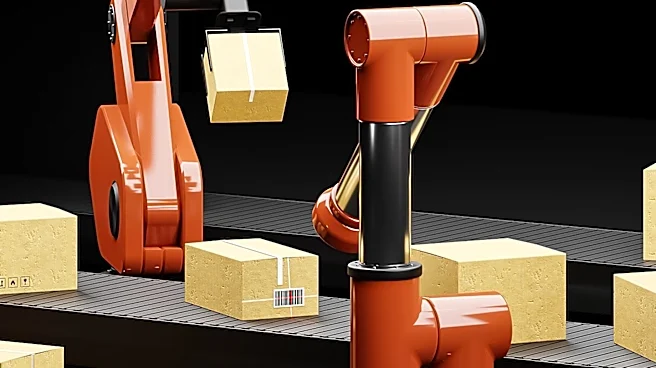
increasing demand for faster last-mile delivery, and the widespread adoption of omnichannel retail strategies. Retailers are enhancing their logistics capabilities to ensure better inventory availability, accelerate order fulfillment, and provide consistent customer experiences across both physical and digital sales channels. The shift towards omnichannel retailing necessitates the coordination of inventory and fulfillment across various touchpoints, including distribution centers, physical stores, digital platforms, and direct-to-consumer delivery networks. This trend is fueling demand for integrated logistics systems that offer real-time inventory visibility, flexible fulfillment options, and efficient returns management. Additionally, technological advancements such as automation, robotics, and artificial intelligence are playing a crucial role in improving warehouse productivity, inventory accuracy, and order-processing speed within the retail supply chain.
Why It's Important?
The projected growth in the retail logistics market signifies a fundamental transformation in how goods are moved and delivered to consumers. For U.S. industries, this means increased investment in logistics infrastructure, technology, and personnel to meet evolving consumer expectations for speed and convenience. Companies involved in warehousing, transportation, and supply chain technology stand to gain significantly from this trend. The emphasis on omnichannel strategies highlights the need for seamless integration between online and offline retail operations, impacting how retailers design their supply chains and customer service models. Businesses that fail to adapt to these changes risk losing market share to competitors offering more efficient and integrated shopping experiences. The demand for faster last-mile delivery also puts pressure on urban logistics and transportation networks, potentially leading to innovations in delivery methods and infrastructure. Furthermore, the adoption of AI and automation in logistics could lead to increased efficiency but also raises questions about workforce displacement and the need for new skill sets in the logistics sector.
What's Next?
Looking ahead, continued investment in resilient and data-driven supply chains is expected to support long-term growth in the retail logistics market. Retailers will likely further integrate digital platforms with logistics providers and transportation networks to enhance responsiveness to demand fluctuations and reduce fulfillment delays. The focus on last-mile delivery will drive innovations in urban logistics, potentially including the wider adoption of drone delivery, autonomous vehicles, and micro-fulfillment centers. Technology providers specializing in AI-driven analytics for demand forecasting, route optimization, and capacity planning will see increased demand for their solutions. Furthermore, the competitive landscape among major logistics players like A.P. Moller-Maersk, Deutsche Post, DSV, and FedEx is expected to intensify as they vie for market share in this expanding sector. Retailers will also continue to explore and implement advanced inventory management systems to maintain real-time visibility and optimize stock levels across their diverse sales channels.
Beyond the Headlines
The evolution of retail logistics extends beyond mere efficiency gains; it touches upon broader societal and environmental implications. The push for faster delivery, while convenient for consumers, contributes to increased traffic congestion and carbon emissions, prompting a need for sustainable logistics solutions. This could accelerate the adoption of electric delivery vehicles and more localized distribution models. Moreover, the integration of AI and automation, while boosting productivity, raises ethical considerations regarding data privacy and the future of work. As supply chains become more interconnected and data-dependent, cybersecurity risks also become more pronounced, requiring robust protective measures. The shift towards omnichannel retail also blurs the lines between physical and digital commerce, potentially reshaping urban retail landscapes and consumer behavior in profound ways, influencing everything from store design to community planning. The ability of logistics networks to adapt to unforeseen disruptions, such as global pandemics or geopolitical events, will also be a critical factor in their long-term resilience and success.