
What's Happening?
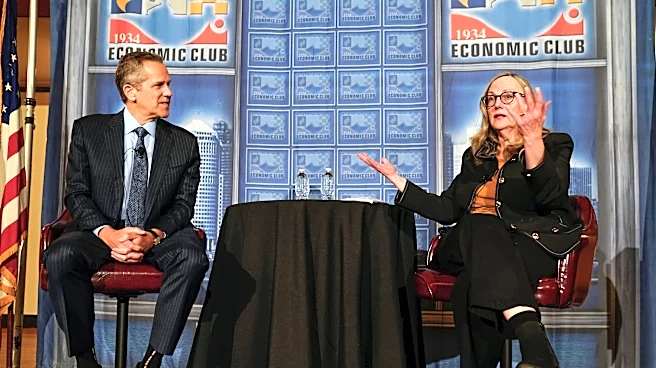
Fed Governor Christopher Waller recently addressed the implications of Artificial Intelligence (AI) in payments, specifically focusing on cross-border transactions and 'agentic commerce.' Waller highlighted
that large language models could significantly enhance the accuracy of sanctions screening and anti-money laundering systems, potentially reducing false-positive alerts. While acknowledging the speed of modern payment systems, he suggested AI would supplement, rather than replace, traditional anomaly detection. He also raised concerns about AI-enabled cyberattacks but noted AI's defensive capabilities. In the context of agentic commerce, where AI agents make e-commerce purchases, Waller described two models: agent-assisted, where buyers maintain control, and agent-delegated, where agents autonomously shop and pay within set guardrails. He identified trust as the primary barrier to scaling agentic commerce, particularly for the delegated model, and emphasized that authentication would shift from verifying the buyer to proving the agent's authority to pay. Waller also pointed out the need to address liability for incorrect purchases made by agents and to recalibrate fraud systems designed for human behavior.
Why It's Important?
Governor Waller's discussion is crucial for the U.S. financial sector as it outlines the Federal Reserve's perspective on integrating AI into payment systems. The potential for AI to improve sanctions screening and anti-money laundering efforts could significantly enhance financial security and compliance, reducing the burden on financial institutions and mitigating risks associated with illicit financial activities. The emergence of agentic commerce, as described by Waller, could fundamentally reshape e-commerce and payment processing, offering new efficiencies but also presenting novel challenges related to trust, liability, and authentication. This shift could impact businesses by altering transaction processes and consumer behavior, requiring new technical standards and regulatory frameworks. The need to balance innovation with safety, integrity, and stability in payments is paramount to maintaining public trust and ensuring the smooth functioning of the financial system in an increasingly AI-driven world.
What's Next?
As AI continues to evolve, the financial industry can expect ongoing discussions and potential regulatory guidance from bodies like the Federal Reserve regarding its responsible implementation in payment systems. Waller's remarks suggest a proactive approach to addressing the challenges posed by AI, particularly in areas like liability and authentication for agentic commerce. Financial institutions and technology providers will likely need to develop new technical standards and protocols to clarify agent authority and manage transaction disputes. The recalibration of fraud systems will be a continuous process, adapting to AI-driven behaviors. Furthermore, the Fed's emphasis on balancing innovation with safety indicates that future policies will aim to foster technological advancement while safeguarding the integrity and stability of the payment ecosystem. This could lead to new industry best practices and collaborative efforts between regulators and market participants to navigate the complexities of AI integration.
Beyond the Headlines
The integration of AI into payment systems, as discussed by Governor Waller, extends beyond mere technological advancement; it touches upon fundamental questions of trust, autonomy, and accountability in digital transactions. The shift from human-centric authentication to verifying an agent's authority represents a significant paradigm change, potentially altering the legal and ethical landscape of commerce. The challenges of liability for AI-driven purchases raise complex questions about who is responsible when an autonomous agent makes an error. This development could also lead to a re-evaluation of consumer protection laws and the need for greater transparency in AI decision-making processes. Ultimately, the widespread adoption of agentic commerce could redefine the relationship between consumers, businesses, and financial institutions, necessitating a thoughtful and comprehensive approach to ensure fairness, security, and public confidence in the evolving digital economy.