





What's Happening?
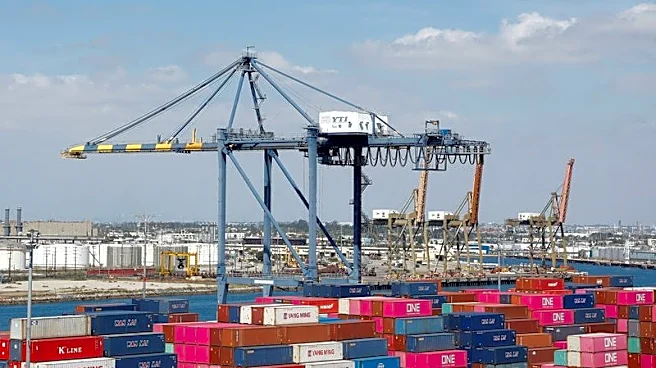
The trade relationship between Canada and the United States has experienced a significant decline, with the total value of trade in goods and services dropping by approximately $1.9 billion from the first quarter of 2024 to the first quarter of 2026.
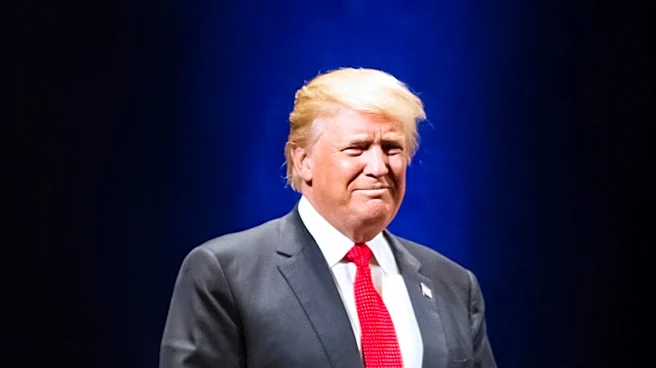
According to Rachael Dolan, a spokesperson for Global Affairs Canada, this represents a 0.6% decrease in trade value. During this period, Canadian exports to the U.S. fell by 1.6%, amounting to a $2.8 billion reduction, while imports from the U.S. increased by 0.6%, or $935 million. Notably, the trade in precious stones and metals saw a substantial increase of $2.8 billion, whereas the motor vehicles and parts sector experienced a significant decline of 18.9%, equating to a $6.7 billion drop. This trade shift comes as the U.S. applies pressure on Canada in anticipation of formal discussions regarding the Canada-U.S.-Mexico Agreement (CUSMA), with President Trump threatening potential new tariffs on Canadian goods.
Why It's Important?
The decline in Canada-U.S. trade is significant as it highlights the shifting dynamics in one of the world's largest bilateral trade relationships. The reduction in trade, particularly in the automotive sector, could have far-reaching implications for industries reliant on cross-border supply chains. The increase in trade of precious stones and metals suggests a shift in trade priorities or market demands. The looming CUSMA discussions and potential tariffs from the U.S. could further impact trade relations, affecting businesses and economies on both sides of the border. This situation underscores the importance of stable trade agreements and the potential economic consequences of political tensions.
What's Next?
As the U.S. and Canada prepare for formal CUSMA talks, the focus will likely be on addressing the trade imbalances and negotiating terms that could stabilize or enhance trade relations. The threat of new tariffs by President Trump adds a layer of complexity to these discussions, potentially influencing the strategies and concessions each country might consider. Businesses and industries affected by these trade shifts will be closely monitoring the outcomes of these negotiations, as they could dictate future trade policies and economic strategies. Stakeholders may also advocate for policies that protect their interests and mitigate any adverse effects of potential tariffs.