







What's Happening?
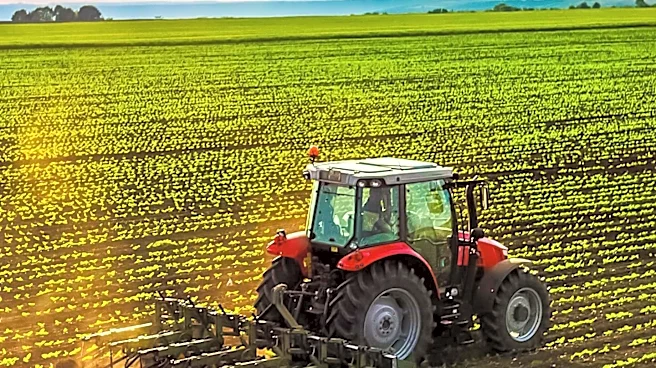
Precision agriculture technology is transforming the way U.S. farmers report their crop acreage, making the process more efficient and accurate. As the July 15 deadline for reporting crop acres to the Farm Service Agency (FSA) and crop insurance providers
approached, many farmers found themselves under pressure. However, those utilizing precision agriculture technology experienced a smoother process. This technology allows for the importation of planting data directly from monitors via the cloud or USB drives, significantly reducing the need for manual data entry. According to Bennett Musselman from Leist Mercantile, this advancement not only saves time but also improves the accuracy of acreage reports, especially for irregularly shaped fields. Farmers like Allen Ett from Pickaway County have reported substantial time and cost savings, allowing them to focus more on farming rather than paperwork.
Why It's Important?
The integration of precision agriculture technology into acreage reporting is crucial for the agricultural sector, particularly in the U.S., where farming is a significant part of the economy. By reducing the time and effort required for reporting, farmers can allocate more resources to actual farming activities, potentially increasing productivity and profitability. The improved accuracy in reporting also ensures that farmers have a more precise understanding of their production history, which can influence future planting decisions and financial planning. This technological advancement strengthens relationships between farmers and their service providers, as it alleviates some of the stress associated with the reporting process. In an economy where every efficiency gain is vital, such innovations can have a substantial impact on the agricultural industry's sustainability and growth.
What's Next?
As more farmers adopt precision agriculture technology, it is expected that the process of acreage reporting will continue to become more streamlined and efficient. This could lead to broader adoption of similar technologies across other aspects of farming, further enhancing productivity and sustainability. Service providers and technology developers may continue to innovate, offering even more advanced solutions to meet the evolving needs of the agricultural sector. Additionally, as farmers become more familiar with these technologies, they may begin to explore other applications, such as precision planting and harvesting, which could further revolutionize the industry.