
What's Happening?
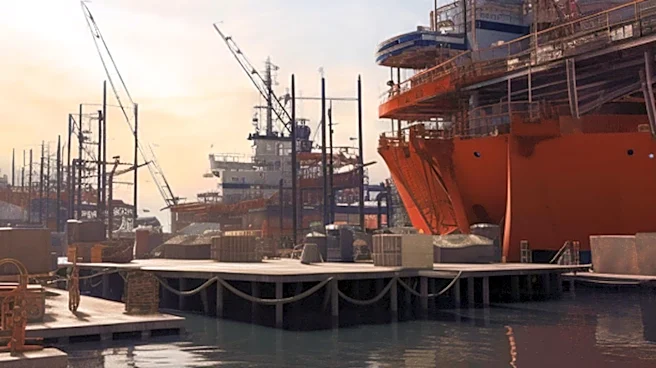
Endúr Maritime, a Norwegian shipyard, has filed for bankruptcy. This decision by the board of parent company Endúr ASA comes after the shipyard experienced significant financial difficulties, primarily
due to the loss of defense-related contracts. According to Norwegian broadcaster NRK, approximately half of Endúr Maritime's annual revenue, which stood at around NOK 250 million, was previously linked to work for the Norwegian Armed Forces. The exclusion from these defense contracts has severely impacted the shipyard's financial viability, leading to its current insolvency. The company's inability to secure new work or maintain existing defense-related projects ultimately forced its leadership to declare bankruptcy.
Why It's Important?
The bankruptcy of Endúr Maritime highlights the critical reliance of specialized industries, such as shipbuilding, on government and defense contracts. For the U.S. and its allies, this event underscores the potential vulnerabilities in the defense supply chain, particularly when smaller, specialized firms are heavily dependent on a limited number of large contracts. The loss of such a shipyard could impact regional employment and industrial capacity, potentially leading to a reduction in skilled labor and specialized infrastructure. While this specific event is in Norway, it serves as a case study for how shifts in defense procurement policies or contract awards can have profound economic consequences for companies and their workforces, emphasizing the need for diversification or robust support mechanisms for strategic industries.
What's Next?
The immediate next steps will involve the legal process of bankruptcy for Endúr Maritime, which will include the liquidation of assets and addressing creditors. The Norwegian government and defense sector may need to assess the implications of losing a domestic shipyard, particularly concerning future naval maintenance and construction capabilities. This situation could prompt a review of procurement strategies to ensure the resilience of the national defense industrial base. For other shipyards and defense contractors, this event may serve as a cautionary tale, encouraging them to diversify their client base or seek stronger governmental assurances for long-term contracts to mitigate similar risks.
Beyond the Headlines
This bankruptcy extends beyond a simple business failure; it touches upon national security and industrial policy. The exclusion of a domestic shipyard from defense work raises questions about the balance between competitive bidding and maintaining national industrial capabilities. In an era of increasing geopolitical tensions, the ability of a nation to independently maintain and build its defense assets is crucial. The loss of Endúr Maritime could lead to a greater reliance on foreign shipyards or a consolidation of defense work among fewer, larger players, potentially reducing competition and innovation in the long run. It also highlights the broader challenge faced by specialized industries in adapting to evolving defense spending priorities and the need for strategic planning to preserve critical industrial capacities.