







What's Happening?
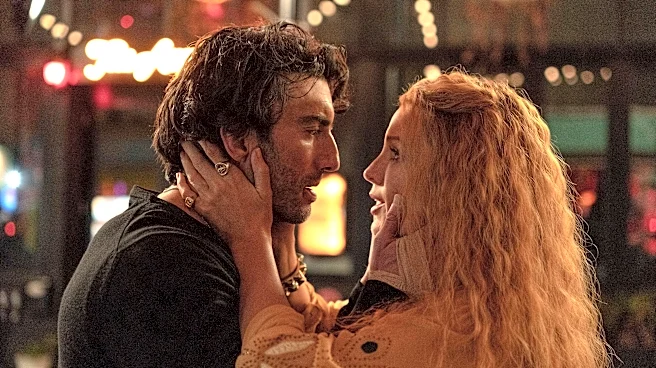
Hollywood actress Blake Lively was awarded approximately $400,000 in attorneys' fees following a dispute with her 'It Ends With Us' co-star Justin Baldoni. This amount is significantly less than the $7.5 million in attorneys' fees and $540,000 in court
costs Lively had initially sought. The award stems from Baldoni's failed defamation lawsuit against Lively, which was settled in May, avoiding a federal trial. Judge Lewis Liman ruled that Lively was entitled only to 'reasonable' fees related to defending against the defamation suit. While the judge found the attorneys' billing rates to be 'not unreasonable' given the case's stakes and complexity, he determined that 'the number of hours for which Lively seeks reimbursement is unreasonable.' The final award included $363,000 in attorneys' fees and an additional $44,000 in court costs.
Why It's Important?
This ruling highlights the judiciary's role in scrutinizing legal fee requests, even in high-profile cases involving celebrities. The substantial reduction in Blake Lively's requested legal fees from $7.5 million to approximately $400,000 underscores the court's emphasis on reasonableness and proportionality in legal proceedings. This decision could set a precedent for future legal disputes in the entertainment industry, encouraging more realistic and justifiable fee claims. For legal professionals, it reinforces the importance of meticulous record-keeping and clear justification for hours billed. For public figures, it demonstrates that even with significant resources, legal costs are subject to judicial oversight, potentially deterring excessive litigation or inflated claims. The differing interpretations of the ruling by both parties' attorneys also illustrate the strategic nature of legal communication and how outcomes can be framed to suit individual narratives.
What's Next?
With the legal fee dispute largely resolved, the focus for Blake Lively and Justin Baldoni will likely shift back to their professional endeavors, including the promotion of their film 'It Ends With Us.' The settlement of the defamation lawsuit and the subsequent ruling on legal fees bring a formal close to this particular legal chapter. While the immediate legal actions are concluded, the implications of this ruling on legal fee expectations in similar cases may be observed in future court decisions. Attorneys involved in high-stakes litigation may adjust their billing practices and fee requests to align more closely with judicial expectations of 'reasonableness.' The entertainment industry, often prone to legal disputes, may also take note of this outcome, potentially influencing how legal battles are pursued and settled among its prominent figures.
Beyond the Headlines
The case subtly touches upon the broader issue of accountability in legal claims and the potential for 'retaliatory lawsuits,' as suggested by Lively's attorneys. The judge's decision to significantly reduce the requested fees could be interpreted as a check on what might be perceived as an attempt to leverage legal processes for disproportionate financial gain. This ruling reinforces the principle that legal systems are designed for justice and fair compensation, not as tools for excessive financial penalties. It also sheds light on the often-opaque world of legal billing, where the 'reasonableness' of hours and rates can be a contentious point. The public nature of this dispute, involving well-known actors, brings these legal intricacies into the spotlight, potentially fostering greater transparency and scrutiny of legal costs in general.