




What's Happening?
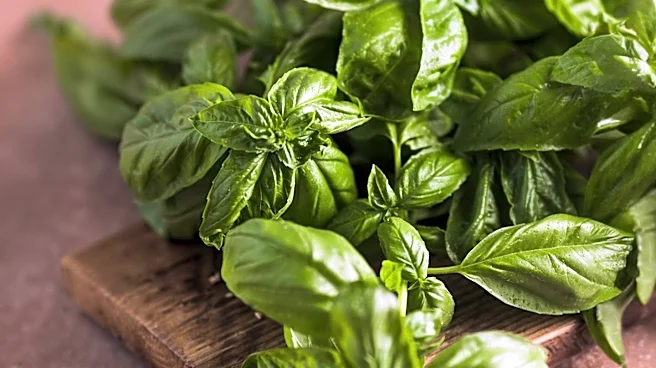
Professional chefs employ a simple yet effective technique to preserve basil, keeping it bright green and fragrant throughout the winter months. This method addresses the common issue of basil turning brown and losing its aroma when frozen directly. The
process involves detaching and thoroughly drying basil leaves, finely cutting them, and then packing them into ice cube tray compartments about two-thirds full. The crucial step is pouring a thin layer of oil over the basil, just enough to cover the herbs. This oil creates a protective film that eliminates air pockets, preventing oxidation caused by the enzyme polyphenol oxidase, which triggers browning. The oil also insulates the delicate cell structure, minimizing damage from ice crystals. After freezing overnight, the basil cubes are transferred to a sealed bag for long-term storage, maintaining their quality for up to a year.
Why It's Important?
This preservation technique is important for culinary enthusiasts and home cooks seeking to extend the usability of fresh basil beyond its growing season. By preventing the degradation of basil's color and fragrance, it allows for year-round access to a key ingredient in many cuisines, enhancing flavor profiles in winter dishes. From a practical standpoint, it reduces food waste by providing an efficient way to store excess basil from gardens or bulk purchases. The method also offers a cost-effective alternative to purchasing out-of-season fresh herbs, which can be expensive and less flavorful. This simple kitchen hack empowers individuals to maintain a higher quality of ingredients in their cooking, contributing to more vibrant and aromatic meals.
What's Next?
The widespread adoption of this basil preservation method could lead to more home cooks and even small-scale culinary businesses incorporating it into their seasonal routines. As awareness of such practical kitchen tips grows, there might be an increased interest in similar preservation techniques for other delicate herbs. This could foster a broader trend towards reducing food waste and maximizing the use of seasonal produce. Additionally, the simplicity and effectiveness of the method might inspire further experimentation with different oils or combinations of herbs in ice cube trays, potentially leading to new culinary shortcuts like pre-made pesto cubes or bouquet garni cubes. The technique reinforces the value of traditional kitchen wisdom in modern cooking practices.
Beyond the Headlines
Beyond its immediate culinary benefits, this basil preservation trick highlights a deeper understanding of food science and the practical application of chemistry in the kitchen. The method directly combats the enzymatic browning and cellular damage that typically occur during freezing, showcasing how simple interventions can overcome complex biological processes. It also reflects a growing consumer interest in sustainable practices, such as reducing food waste and utilizing fresh, local ingredients for longer periods. This approach encourages a more mindful relationship with food, promoting self-sufficiency and an appreciation for the natural cycles of produce. Ultimately, it's a testament to how small, informed changes in kitchen habits can yield significant improvements in both culinary quality and environmental impact.