








What's Happening?
In 2021, U.S. private equity firm Clayton, Dubilier & Rice completed a £7 billion acquisition of Morrisons, Britain's fourth-largest supermarket chain. This acquisition has led to significant strategic shifts for Morrisons, which operates over 500 stores
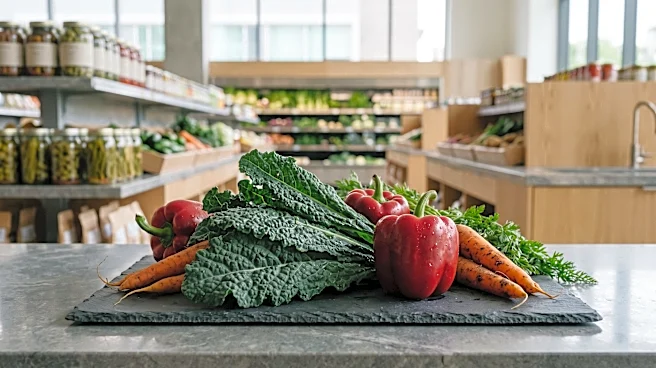
nationwide and serves millions of customers weekly. The supermarket has since expanded its partnerships with delivery services such as Deliveroo and Amazon to bolster its online presence, adapting to evolving consumer shopping habits. Additionally, Morrisons has increased its footprint of Morrisons Daily convenience stores through collaborations with forecourt operators. A key focus for the retailer under its new ownership has been maintaining price competitiveness amidst the ongoing cost-of-living challenges faced by British consumers. Morrisons also continues to emphasize its commitment to fresh food and in-store manufacturing, a distinctive approach that dates back to its founding in 1899.
Why It's Important?
The acquisition of Morrisons by Clayton, Dubilier & Rice highlights the increasing influence of U.S. private equity firms in the global retail sector. This move has significant implications for the UK grocery market, as Morrisons, a major player, undergoes strategic transformations. The emphasis on expanding online delivery services and convenience store formats reflects broader industry trends driven by changing consumer preferences and the competitive landscape. For U.S. investors, this acquisition represents a substantial investment in a mature market, potentially yielding long-term returns through operational efficiencies and market share adjustments. The strategic shifts implemented by Morrisons under its new ownership could serve as a case study for other private equity firms considering similar ventures in international retail, demonstrating how U.S. capital can reshape established foreign businesses.
What's Next?
Morrisons is expected to continue its strategic evolution under the ownership of Clayton, Dubilier & Rice. Future developments will likely include further expansion of its online capabilities and the Morrisons Daily convenience store format to capture more market share. The supermarket will also need to navigate the ongoing economic pressures affecting consumer spending in the UK, which will influence its pricing strategies and promotional activities. Its commitment to in-store manufacturing and sourcing from British farmers will remain a core part of its brand identity, potentially being leveraged in marketing efforts. Industry watchers and consumers will be observing how these strategies impact Morrisons' financial performance and its competitive position against other major UK grocery retailers in the coming years.
Beyond the Headlines
The acquisition of Morrisons by a U.S. private equity firm also touches upon broader themes of globalization and the evolving nature of retail ownership. It raises questions about the balance between maintaining a company's historical identity and implementing new strategies driven by financial investors. Morrisons' unique heritage, including its in-house food manufacturing facilities, distinguishes it from many competitors. The challenge for Clayton, Dubilier & Rice will be to modernize and grow the business while preserving these core elements that resonate with its customer base. This dynamic interplay between tradition and innovation, driven by foreign investment, could set precedents for how other long-standing national brands adapt to a rapidly changing global marketplace.